
Repurposing old gardening items not only saves money but also contributes to sustainable gardening practices. This DIY project transforms cracked plastic nursery pots and other garden scraps into a deep-watering tomato trench system. This system provides consistent moisture to tomato roots, enhancing their growth and yield.
This DIY deep-watering system is particularly beneficial for tomato plants, which thrive with consistent moisture levels. By channeling water directly to the root zone, it minimizes water wastage and reduces the risk of fungal diseases associated with surface watering. The system can be adapted for use with other deep-rooted plants like peppers, cucumbers, and eggplants, making it versatile for any vegetable garden.
DIY Deep-Watering Tomato Trench System
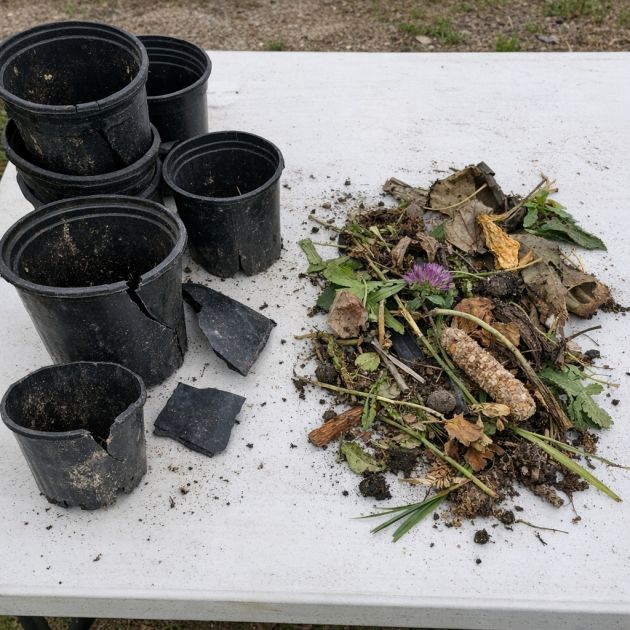
Materials
Cracked plastic nursery pots (at least 3)
Heavy duty shears
Garden hose or perforated PVC pipe (4-6 feet long)
Garden trowel or spade
Compost or mulch (optional)
Directions
Use heavy duty shears to cut off the bottom of each cracked plastic nursery pot, leaving the sides intact.
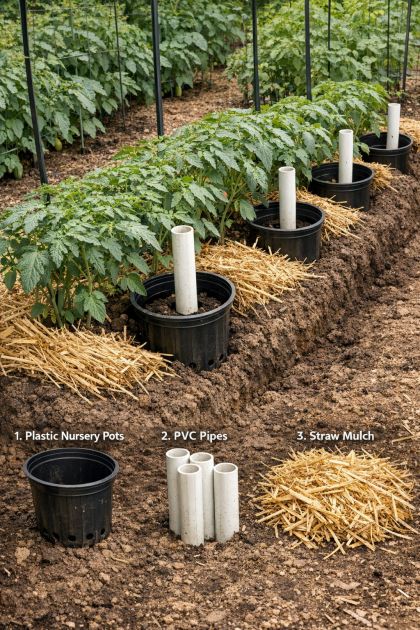
Dig a trench in your garden bed where you plan to plant your tomatoes. The trench should be approximately 12 inches deep and long enough to accommodate your nursery pots and hose or pipe.
Place the cut nursery pots in the trench, spacing them every 12-18 inches. The open bottom should face downward, and the top should be level with or slightly above the soil surface.
Lay the garden hose or perforated PVC pipe along the line of pots, ensuring it is positioned to allow water to flow directly into each pot.
Backfill the trench with soil, ensuring the pots and hose/pipe remain in place.
Plant your tomato seedlings adjacent to the pots, allowing their roots to grow toward the moisture source.
Optionally, add a layer of compost or mulch around the plants to retain soil moisture and suppress weeds.
Variations & Tips
For variations, consider using larger nursery pots for bigger plants or adapting the system for raised beds by adjusting the depth of the trench. You can also use recycled plastic bottles instead of nursery pots for a more compact system. Adding a timer to your hose system can automate watering, ensuring your plants receive regular moisture without manual effort. Additionally, integrating a slow-release fertilizer into the system can provide nutrients directly to the root zone, further enhancing plant growth.