
Creating a well-drained raised bed is essential for optimal plant growth. By using brightly colored foam pool noodles and common garage scraps, you can enhance drainage and aeration in your garden beds, preventing root rot and promoting healthier plants. This simple and cost-effective method is perfect for gardeners looking to upcycle materials and improve their garden's functionality, especially during the wet seasons when drainage is crucial.
This DIY fits seamlessly into various garden styles, such as a modern minimalist garden with clean lines or a whimsical cottage garden with colorful accents. It's ideal for raised beds housing vegetables like tomatoes and peppers, herbs such as mint and basil, or even vibrant flowers like petunias and marigolds. The colored foam adds a playful touch, perfect for family gardens or community spaces.
Foam Pool Noodle Raised Bed Drainage Logs
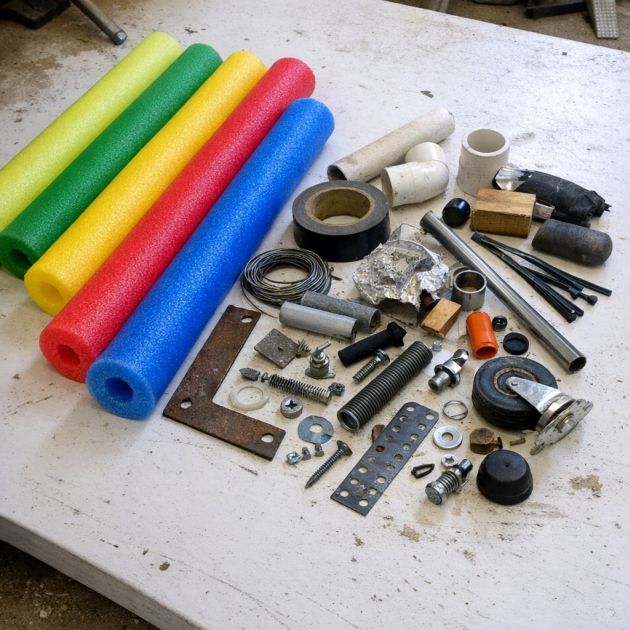
Materials
Brightly colored foam pool noodles (pink and blue), sliced into 2-inch thick rings
Old window screen or landscape fabric, cut to fit the bottom of the raised bed
Gravel or small stones, enough to cover the bottom of the bed
Directions
1. Start by measuring the dimensions of your raised bed. Cut the old window screen or landscape fabric to line the bottom of the bed snugly.
2. Place a layer of gravel or small stones on top of the fabric, ensuring it is evenly distributed to cover the entire bottom.
3. Slice the foam pool noodles into 2-inch thick rings and scatter them over the gravel layer. These will act as drainage logs, allowing water to pass through while preventing soil compaction.
4. Once the foam rings are in place, fill the bed with your choice of soil mix, ensuring it is well aerated and suitable for the plants you intend to grow.
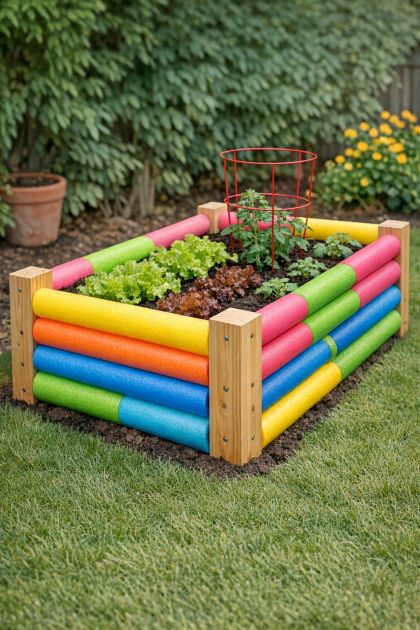
Variations & Tips
For a different aesthetic, consider using foam pool noodles in more muted tones, like green or beige, to blend with a natural garden setting. If you live in a drier climate, swap the gravel for pumice to retain moisture while still ensuring drainage. For plant-specific adaptations, adjust the soil type to suit acid-loving plants like blueberries by incorporating peat moss or pine bark in the soil mix.