
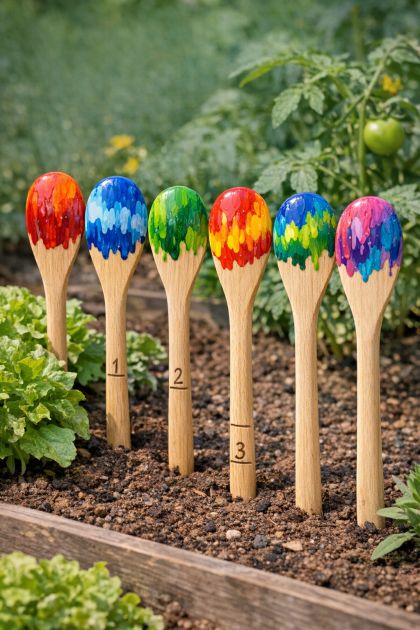
Transform old crayons and wooden spoons into vibrant plant depth markers that will bring a pop of color to your garden. This simple DIY is perfect for gardeners looking to add a creative touch to their planting routine while recycling materials from around the house. By melting crayons onto wooden spoons, you create durable, colorful markers that visually enhance your garden and help track plant growth and depth.
Display these colorful plant depth markers in your garden, among potted plants, or in an herb garden. The bright colors of the melted crayons will contrast beautifully against the natural greens and browns of the garden, making them both functional and decorative. Arrange them in clusters for a playful, artistic effect or use them individually to mark specific plants. Their vibrant hues can also coordinate with outdoor furniture or garden decor for a cohesive look.
Crayon-Melt Wooden Spoon Plant Markers
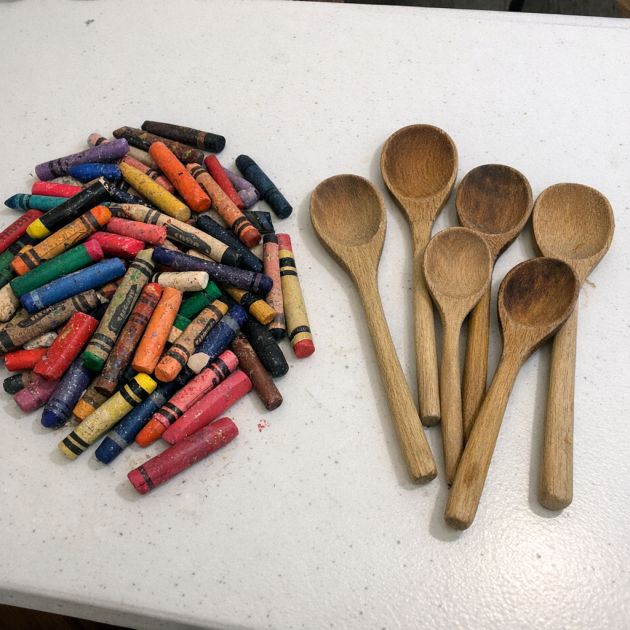
Materials
Old crayons (various bright colors)
Wooden spoons (1 per marker)
Aluminum foil (enough to cover work surface)
Directions
1. Gather old crayons and peel off any paper wrappers. Break the crayons into small pieces for easy melting.
2. Cover your work surface with aluminum foil to protect it from melted wax and make clean-up easier.
3. Arrange wooden spoons on the aluminum foil with the spoon heads facing up.
4. Place crayon pieces onto the spoon heads in desired color patterns. You can mix colors for a marbled effect or keep them solid.
5. Carefully use a hairdryer on a low setting to melt the crayons onto the spoon heads. Keep the dryer moving to avoid overheating any one spot.
6. Allow the melted crayons to cool and harden completely before handling the spoons.
7. Once the wax is set, your Crayon-Melt Wooden Spoon Plant Markers are ready to use in the garden.
Variations & Tips
For an added touch, consider using a wood-burning tool to engrave plant names onto the handles of the spoons before adding the crayon wax. This personalization can help with plant identification and add a rustic charm to the markers. You can also experiment with different spoon sizes or use different wooden utensils for varied marker heights and styles, as long as the core method of melting crayons onto the surface is maintained.