
Creating textured backyard slabs using woven plastic paper plate holders and cement is an innovative way to repurpose everyday materials into something extraordinary. This DIY project offers a cost-effective solution for adding unique, heavy-duty slabs to your outdoor space. The secret ingredient enhances the texture and durability, making these slabs both functional and visually appealing.
These textured slabs can be styled as stepping stones or patio accents. Place them in a garden pathway or use them to create an outdoor seating area. Coordinate with earthy tones such as browns and greens or pair with vibrant outdoor furniture to create a striking contrast. The woven texture adds depth and interest, enhancing any natural setting.
Woven Texture Cement Slabs
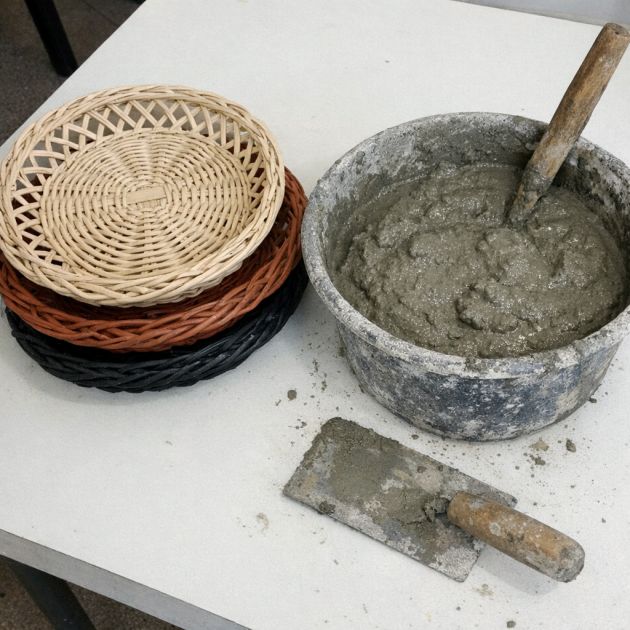
Materials
Woven plastic paper plate holders, 5 units
Cement mix, 1 bag (standard 60 lb)
Water, as per cement mix instructions
Secret ingredient: Fine sand, 2 cups
Beige drop cloth, 1 piece
Mixing container
Trowel
Protective gloves
Directions
Lay the beige drop cloth on a flat surface to protect the area and provide a base for your project.
Mix the cement with water in a container according to the instructions on the cement mix bag. Add the fine sand as the secret ingredient and stir until the mixture is smooth.
Pour the wet cement mixture onto the drop cloth, spreading it to your desired slab size and thickness using a trowel.
While the cement is still wet, press the woven plastic paper plate holders into the surface, ensuring they are evenly spaced and partially submerged to create an impression.
Allow the cement to set slightly, then carefully remove the plate holders to reveal the textured pattern.
Let the slabs cure completely, following the recommended drying time for the cement mix.
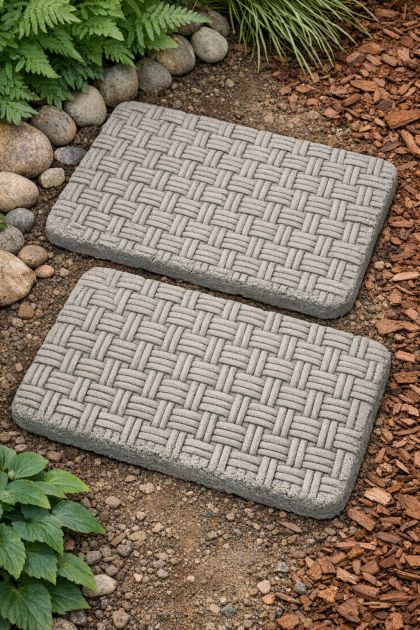
Once fully dried, the slabs are ready to be placed in your backyard setting.
Variations & Tips
To add color to your slabs, consider mixing cement dye into the wet mixture before pressing in the plate holders. This can create vibrant slabs that complement or contrast with your garden's color palette. Additionally, experiment with varying the thickness of the slabs for different applications, such as thinner tiles for a patio or thicker stepping stones for a more durable pathway. For a more intricate design, use different patterns of plate holders or arrange them in overlapping configurations.