
If you want patio blocks that look like pricey stone pavers but cost very little to make, this is one of my favorite weekend projects. The basic idea is wonderfully simple: use cheap foam can coolers to create deep, irregular texture, then coat and pour with a thick cement mix so the finished blocks look rugged, heavy, and almost store-bought in the best way.
I love projects like this because they feel high-impact without demanding a full garage workshop or a giant budget. If you're decorating a small patio, building a garden path, or just want a creative way to upgrade an outdoor corner, these textured blocks are approachable even if you've never worked with cement before.
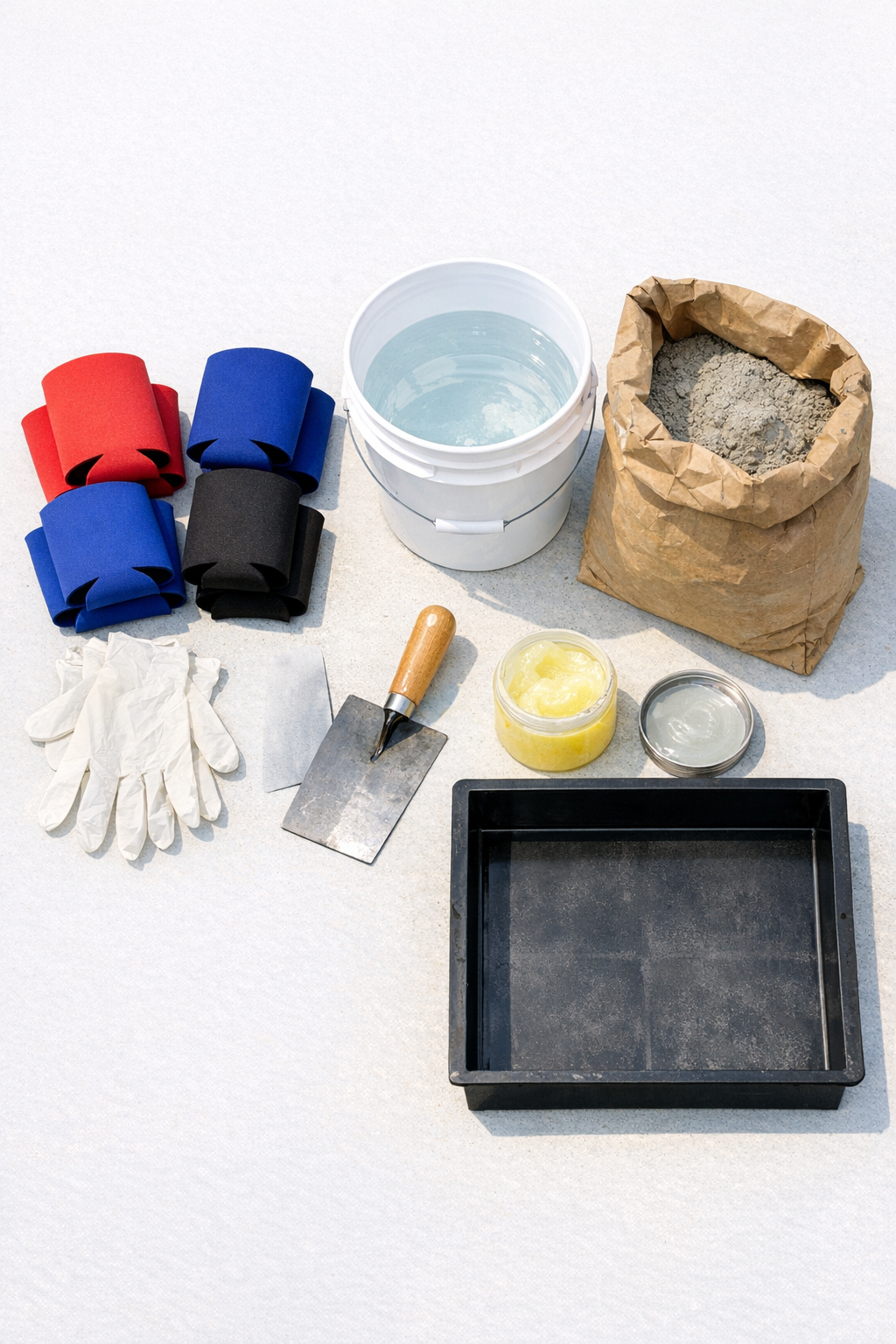
Materials
4 foam can coolers, standard 12 oz size
Instructions
1. Set up your workspace outdoors or in a well-ventilated garage, and place the plastic drop cloth under your mold and mixing area to make cleanup easier.
2. Lightly coat the inside of the mold with petroleum jelly or cooking oil so the cured block releases without chipping at the edges.
3. Cut or tear the foam can coolers into uneven strips, chunks, and curved pieces roughly 1 to 3 inches wide; this random texture is what makes the finished block look like natural stone. I like to avoid making the pieces too uniform because the irregular pattern ends up looking much more convincing.
4. Press the foam pieces into the bottom of the mold with the textured sides facing up, covering most of the base but leaving a little variation in spacing for a more organic surface.
5. Pour the cement mix into the bucket or mixing tub, then add water a little at a time until it becomes very thick, like stiff brownie batter that holds its shape when stirred.
6. Scoop the thick cement into the mold over the foam pieces, pressing firmly so the mix fills all the gaps and captures the texture underneath.
7. Continue filling the mold until the block is about 1 1/2 to 2 inches thick, then level the back with a trowel or a scrap of wood so the finished paver sits flat.
8. Tap the sides of the mold several times to release trapped air, then let the block rest undisturbed until it is firm enough to demold, following your cement mix's cure time.
9. Carefully turn the mold over and remove the block, then peel away the foam pieces from the textured face while the cement is still slightly green but stable.
10. Let the block cure fully for 24 to 48 hours before moving it into place, and keep it lightly misted if the weather is hot or dry to help prevent surface cracking.
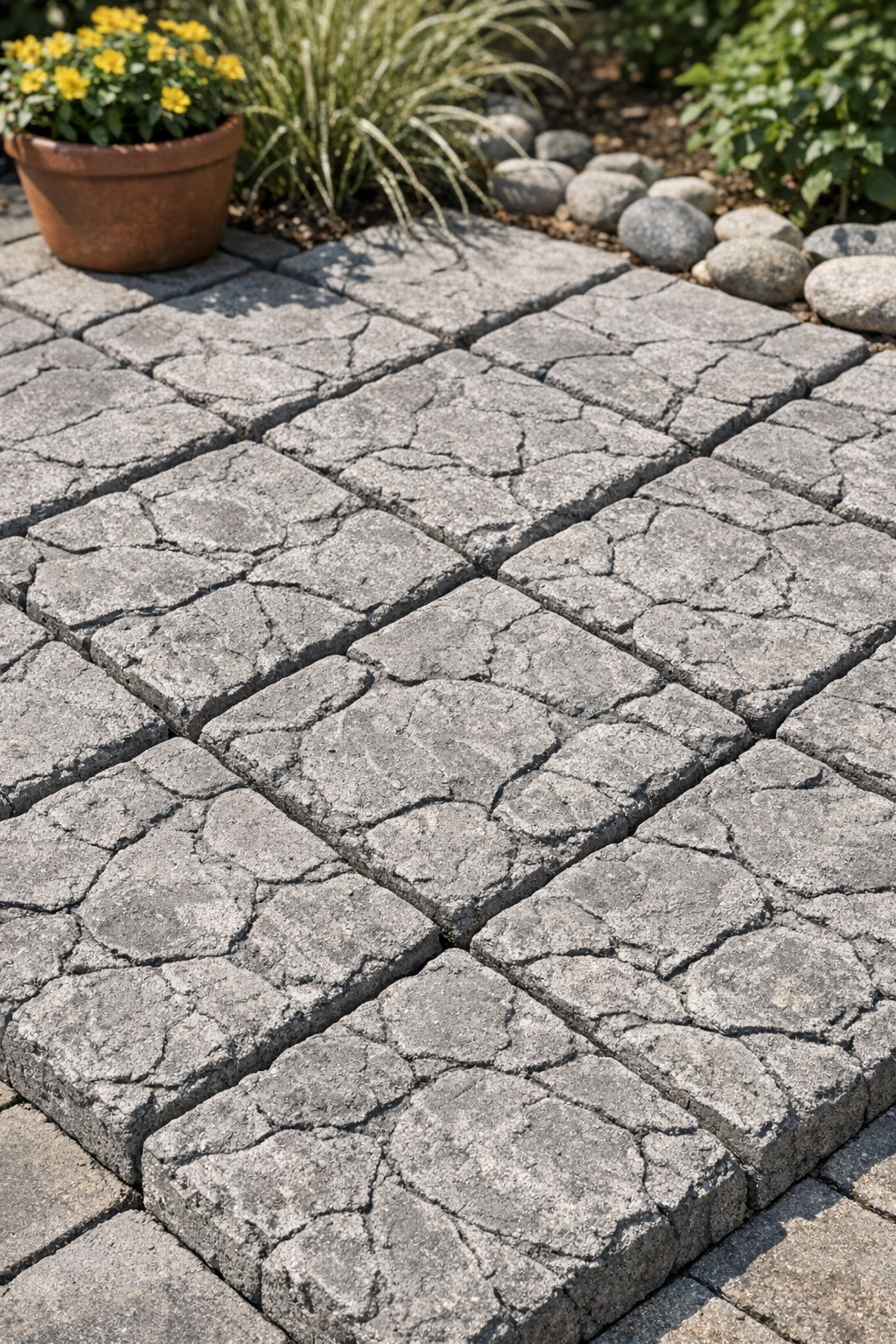
Variations & Tips
Make a larger paver: Use a bigger mold and double the cement mix, but keep the thickness at least 1 1/2 inches so the block feels sturdy underfoot.
Change the texture: Tear some foam into long jagged ridges and others into stubby chunks so the face has a more natural, less repeated pattern.
Add color: If you want a warmer stone look, mix a cement-safe pigment into the dry mix before adding water.
Plan for multiples: When I'm making several blocks for a path, I prep all the foam pieces first assembly-line style, which saves a surprising amount of time after a long workday.
Use them where they will stay put: These blocks are great for patios, stepping paths, and decorative corners, but they should sit on compacted soil, sand, or gravel so they stay level.
Don't overwater the mix: A thick mix is the secret here; if the cement gets too runny, it won't hold the deep texture nearly as well.