
I love a project that rescues something bulky from the trash, and torn vinyl pool floats are one of those things that usually seem impossible to reuse. With a little heat and one other main material, you can turn that old vinyl into surprisingly sturdy replacement slings for patio chairs. It’s a practical fix that saves money, gives tired outdoor furniture a second life, and keeps those bright summer materials working a little longer.
This project is best for anyone with basic sewing skills and a sling-style patio chair frame that needs new fabric. I especially like this kind of repair for family patios, because those chairs get used hard at our house, and I need something that can stand up to kids, snacks, wet swimsuits, and long evenings outside.
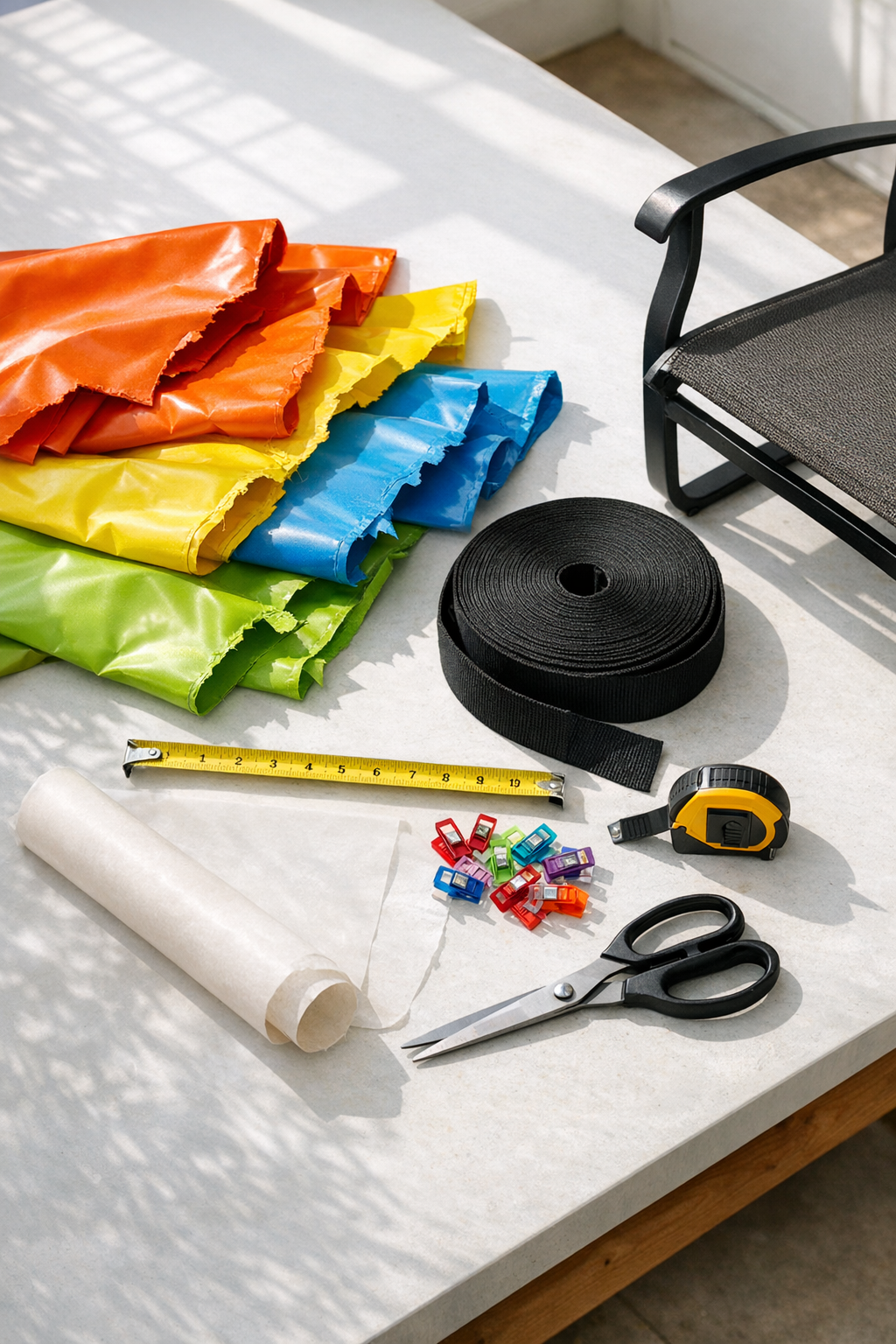
Materials
Instructions
1. Remove the old sling from the patio chair frame and measure its finished width, finished length, and the width of each side pocket that slides into the chair rails.
2. Add 1 inch to the width and 2 inches to the length of your measurements so you have trimming room after fusing the vinyl panels.
3. Cut open the torn pool floats along their seams and trim away valves, heavily stretched areas, and any patches that feel brittle.
4. Wipe the vinyl clean and dry it fully, because any dirt or moisture trapped inside the layers can weaken the fused seams.
5. Layer pieces of vinyl with at least 1 inch of overlap, shiny sides aligned the same way, until you build a panel slightly larger than your needed chair sling size.
6. Sandwich the overlapped vinyl between parchment paper and press with a dry iron on low to medium heat for 8 to 12 seconds at a time, lifting and moving instead of dragging.
7. Let each fused section cool completely, then test the seam with a gentle tug; if it separates, press it again for a few more seconds.
8. Repeat the layering and fusing until you have two full panels, then trim both to the exact finished sling width and length you measured from the original chair.
9. Cut two pieces of outdoor webbing the same length as each long side of the sling plus 2 extra inches for turning under at the ends.
10. Fold one long edge of the vinyl over the webbing to form a side pocket sized to fit your chair rail, then clip it in place and stitch a straight seam from top to bottom.
11. Sew a second line of stitching 1/4 inch inside the first seam for extra strength, then repeat the same pocket construction on the opposite long edge.
12. Fold the short ends under 1 inch, enclosing the webbing ends neatly, and stitch across each end twice to lock the pockets in place.
13. Compare the finished sling to the old one and trim any uneven spots so both side pockets stay straight and parallel.
14. Slide the sling pockets back onto the chair rails, reassemble the frame, and pull the fabric into position so the seat is centered and taut.
15. Test the chair carefully on a flat surface, checking that the sling stays smooth, the seams do not pull, and the chair feels evenly supportive before regular use.
Variations & Tips
For extra strength: Use double layers of fused vinyl in the seat section only, where the most weight sits. I like this if the chair gets used every day by the whole family.
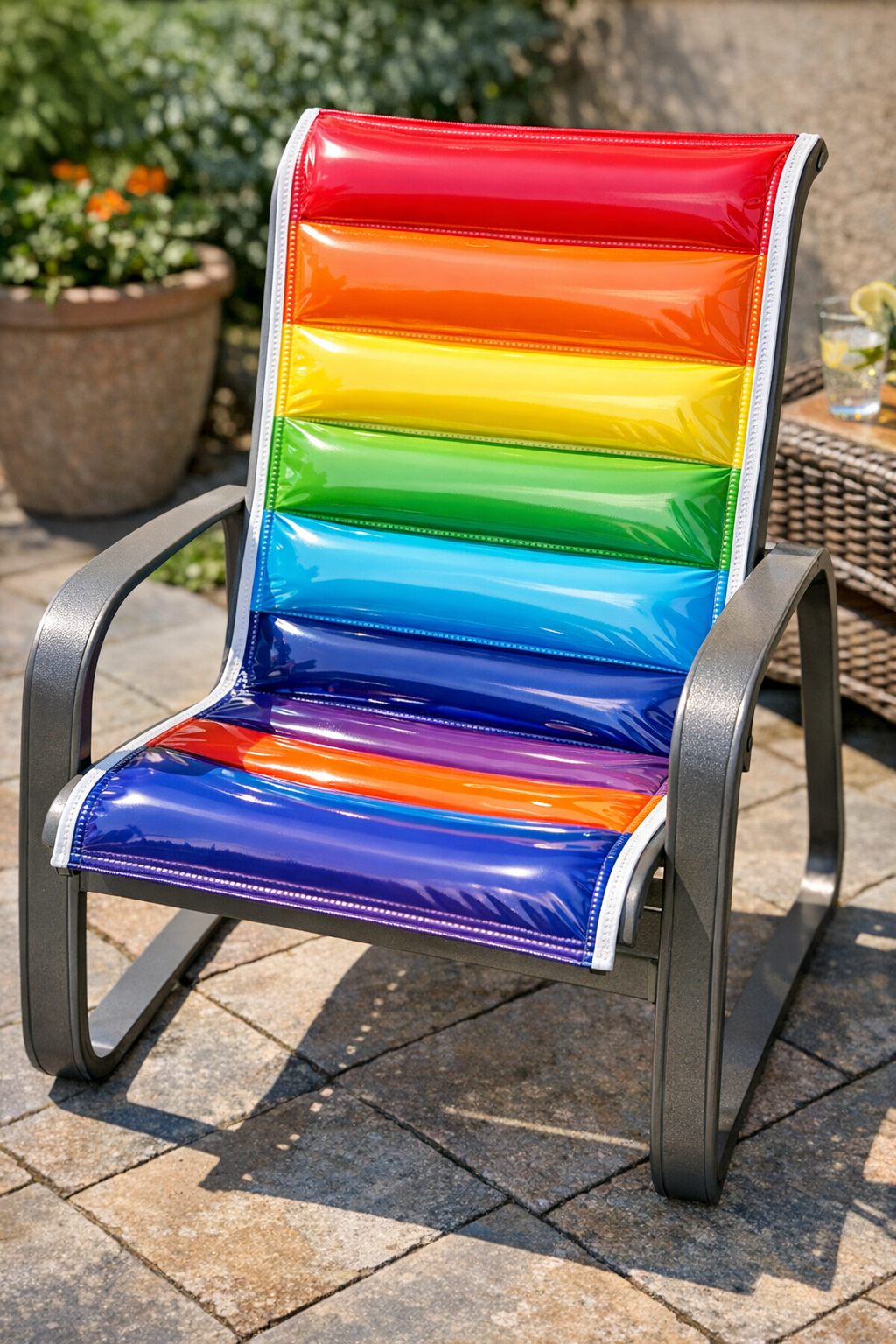
For picky color preferences: Arrange the pool float pieces in stripes or blocks before fusing so the final chair looks intentional instead of patchy. This is a fun way to make mismatched materials feel designed.
If your machine struggles: Lengthen your stitch to about 3.5 mm and use tissue paper under the vinyl if it sticks while sewing. Tear the tissue away after stitching.
For a cleaner finish: Round the top two corners slightly before sewing the side pockets. That small change helps the sling slide into the frame more easily.
Heat safety tip: Test one scrap first, because different pool floats melt at different speeds. If the vinyl warps or shrinks quickly, lower the iron temperature right away.
Weather-ready tip: Outdoor polyester webbing holds up better than cotton or basic craft webbing. It is worth using here, because it carries a lot of the stress at the chair rails.
Easy maintenance: Wipe the finished sling with mild soap and water and let it dry before stacking chairs. That simple habit helps the seams last longer through the season.