
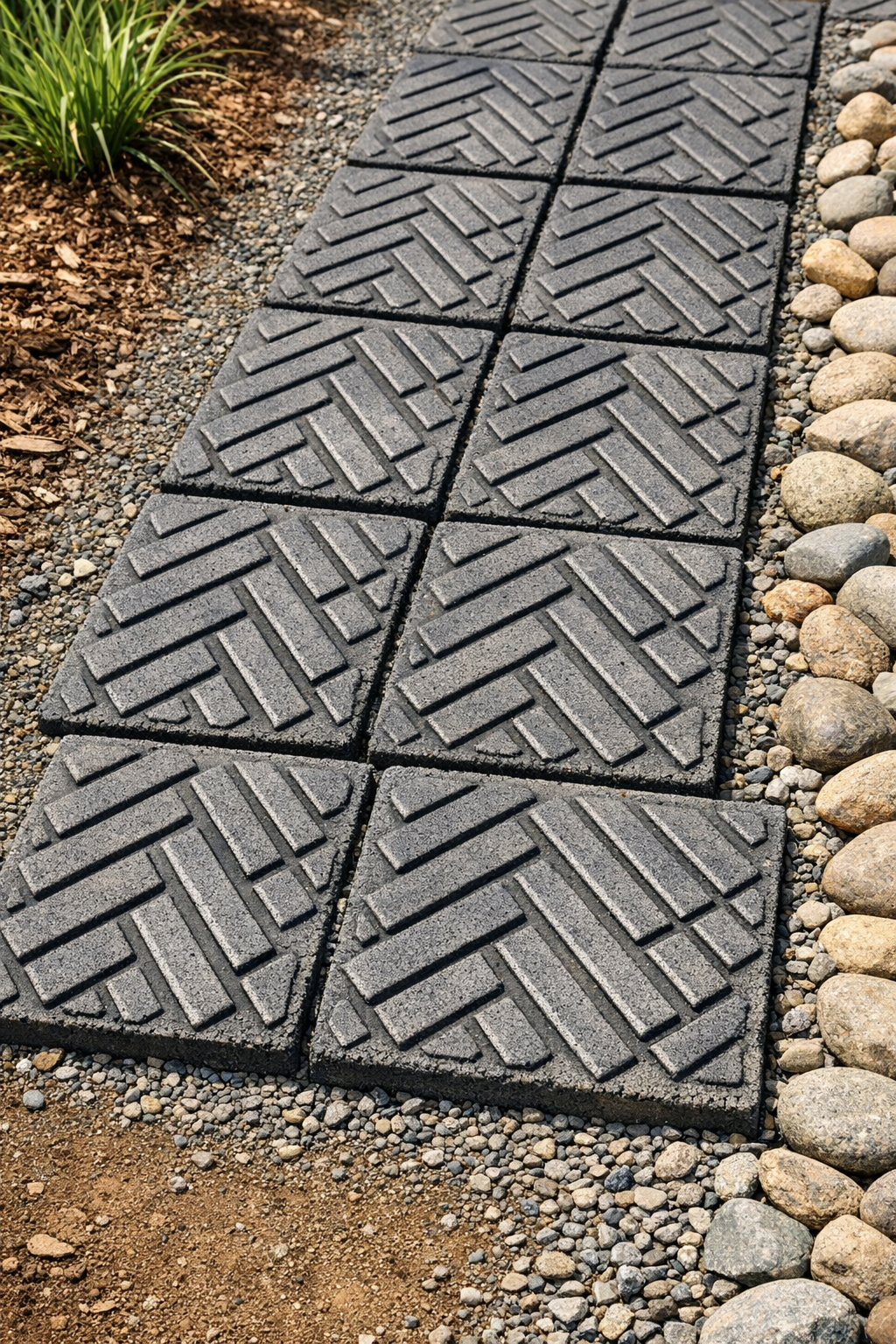
I love a project that turns a few practical materials into something that looks far more expensive than it is, and these heavy-tread patio blocks do exactly that. By using a thick rubber truck floor mat as the mold surface, you can give plain cement pavers a sturdy, textured finish that feels right at home in a backyard path, around a grill station, or leading out to the garden.
What I especially like about this project is that it’s simple enough for a weekend and durable enough to handle real family foot traffic. If you’ve got a spot in the yard that gets muddy or worn down, these blocks are a smart fix, and you do not need a long supply list to make them happen.
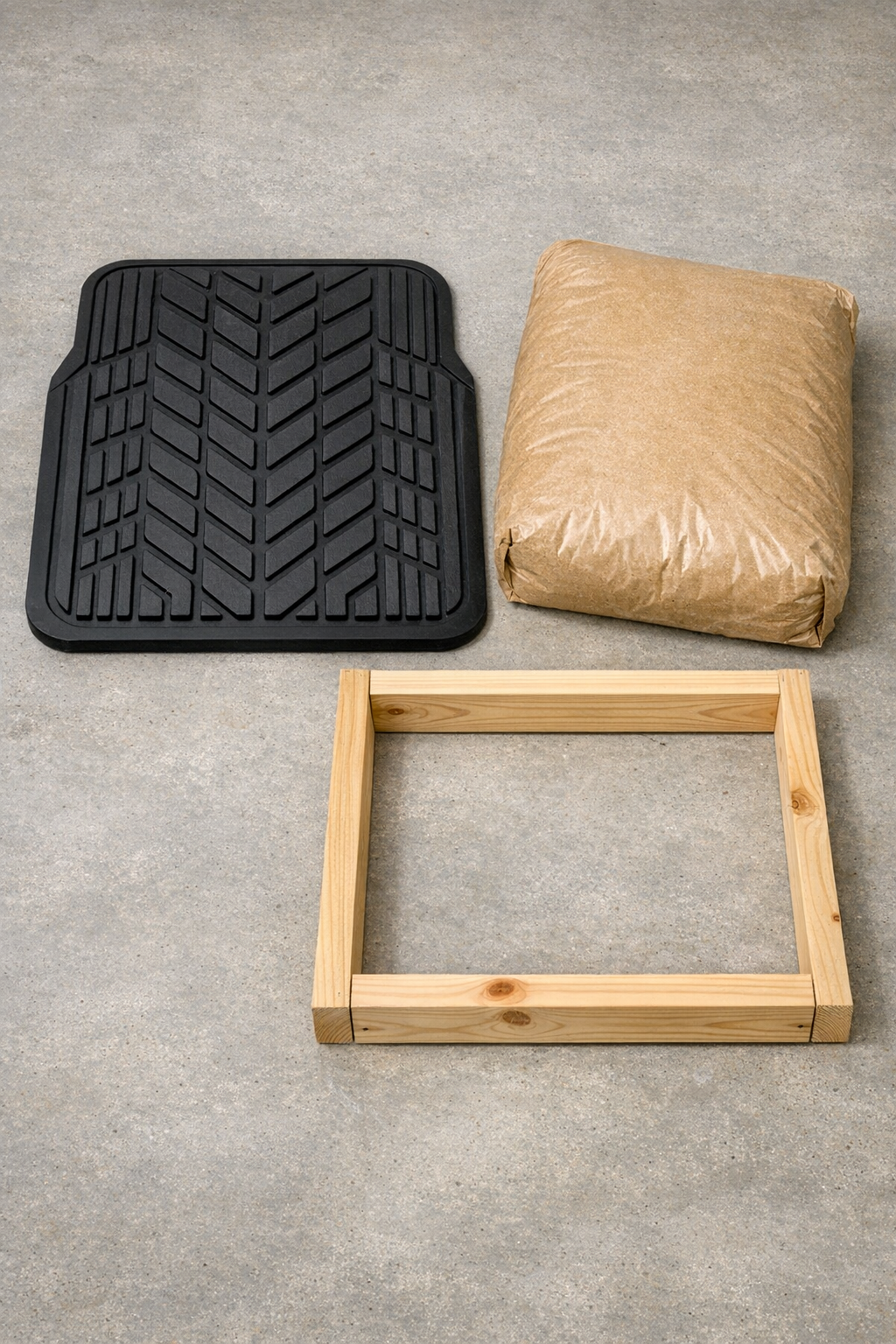
Materials
1 thick rubber truck floor mat, approximately 18 x 24 inches, with deep tread pattern
Instructions
1. Cut or choose a section of the rubber truck floor mat with a bold tread pattern and clean it well so no dirt transfers into the cement.
2. Screw the four 16-inch boards together into a square form, and set it on top of the mat over the tread area you want to use.
3. Lay the plastic drop cloth under the mat if you are working on a surface you want to protect, then lightly coat the treaded mat surface and the inside of the wood form with oil.
4. Mix the concrete in a bucket or wheelbarrow with water until it reaches a thick brownie-batter consistency that holds its shape but still spreads easily.
5. Shovel the wet concrete into the form, filling it to a thickness of about 2 inches for a sturdy patio block.
6. Tap the sides of the wooden form with a scrap board or rubber mallet to release air bubbles, then smooth the top with a trowel or a flat piece of wood.
7. Let the block set undisturbed for 24 to 36 hours, depending on temperature and humidity, until it is firm enough to remove the form.
8. Unscrew the wood form, carefully lift the concrete block off the rubber mat, and turn it over to reveal the heavy tread texture.
9. Cure the block for another 5 to 7 days in a shaded spot, lightly misting it once or twice a day if the weather is hot and dry.
10. Set the finished blocks on a compacted sand or soil base, spacing them evenly to create a patio path or sturdy stepping area.
Variations & Tips
Make them larger: If you want broader patio stones, use longer boards for the form and keep the concrete at least 2 inches thick so the blocks stay strong.
Add color: You can mix in a cement colorant before pouring if you want a warmer brown, charcoal, or slate look that blends in with your landscaping.
Use a simple base: For the best long-term result, I like to set these on a leveled bed of sand or fine gravel so they do not wobble after heavy rain or lots of family traffic.
Try a pattern mix: If your mat has different tread sections, pour blocks from more than one area so the finished walkway has a little variation without looking mismatched.
Keep edges neat: After the concrete begins to firm up, you can run a small trowel along the top inside edge of the form for a cleaner, more finished border.
Plan for picky weather: Just like when I’m trying to get dinner on the table before a storm rolls in, timing matters here too; avoid pouring in very hot sun or during rain so the surface cures evenly and stays strong.