
I’ve always had a soft spot for projects that turn the plainest household things into something sturdy and useful out in the yard. This one does exactly that: with a plastic hanging shoe organizer, cement, and rope, you can make a row of heavy hanging yard pods that look far more expensive and clever than they have any right to. Once the cement cures inside those little pockets, each pod becomes a tough planting cup that hangs neatly in place and stands up beautifully to weather.
What I love most is that this project is simple enough for a determined beginner, but the finished result looks like something you’d spot in a garden shop. It’s a fine choice for herbs, trailing flowers, or even little succulent pockets by a fence or shed wall. It reminds me of the sort of practical handiwork folks around here have always valued—making something handsome from what’s on hand and giving it a second life.
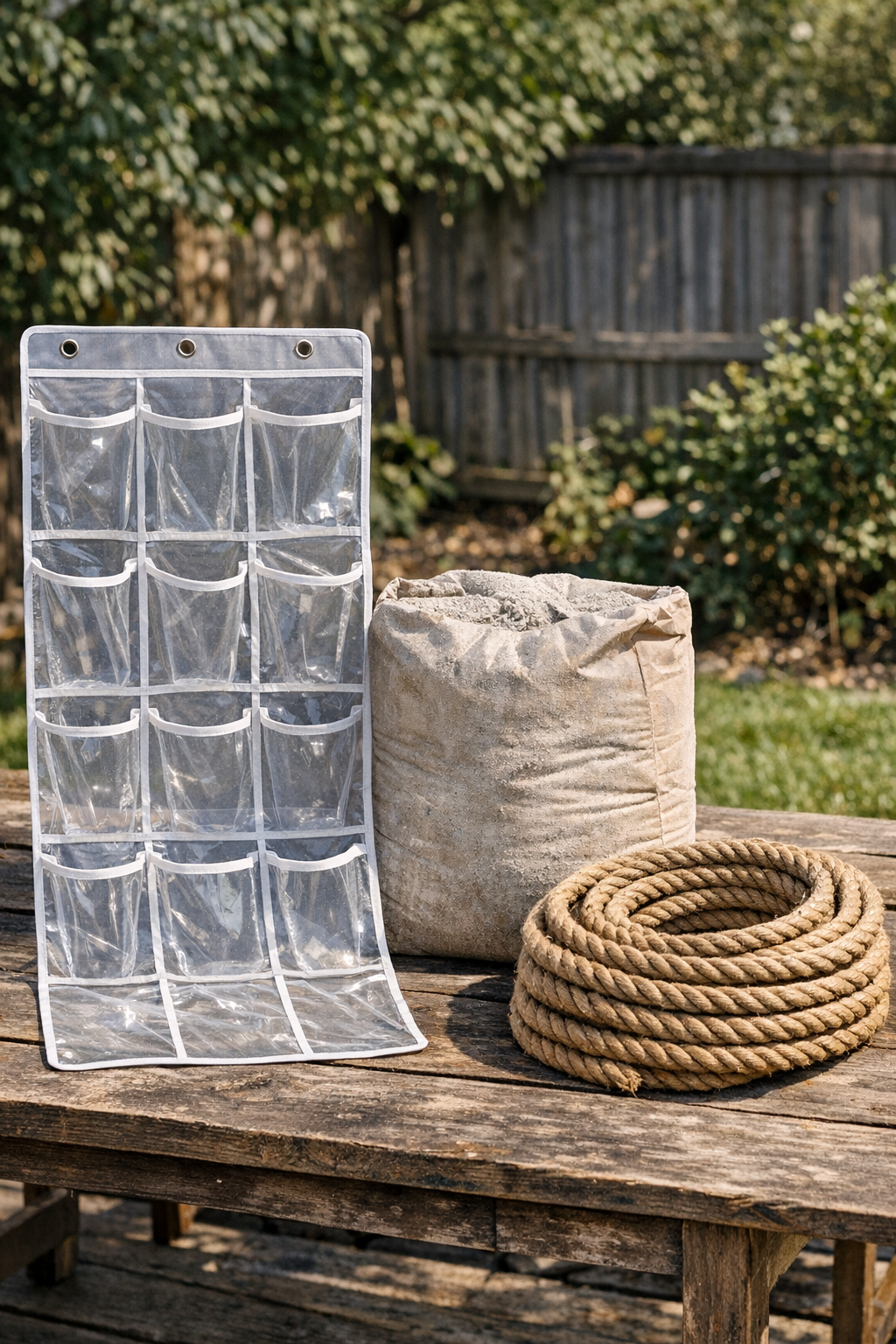
Materials
Instructions
1. Lay the shoe organizer flat on a level work surface outdoors or in a well-ventilated area, and decide how many pockets you want to turn into pods. For a manageable finished piece, I like using 6 to 10 pockets rather than filling the whole organizer.
2. Cut the rope into hanging lengths: two side supports about 6 feet long each, plus one top hanging loop about 2 feet long. Set the pieces aside so they’re ready before the cement is mixed.
3. Tie the long side ropes vertically through or around the organizer’s top hanging edge and along the sides so they’ll help carry the weight once the pods are cured. Keep the ropes snug and evenly spaced so the organizer will hang straight.
4. Mix the cement according to the package directions until it is thick like oatmeal, not runny. A slightly stiff mix is easier to control in the pockets and less likely to sag.
5. Fill each chosen pocket about two-thirds to three-quarters full with wet cement, pressing the mix gently into the bottom corners. Leave a little space at the top of each pocket so the cement can settle without spilling over.
6. Lift the organizer carefully and hang it from a sturdy temporary support so the filled pockets settle into rounded pod shapes under their own weight. Adjust the ropes if needed so the weight is distributed evenly from top to bottom.
7. Let the cement cure fully according to the mix directions, giving it at least 24 to 48 hours before moving it much. If the weather is hot or windy, check that it isn’t drying too fast and keep it in a sheltered spot.
8. Once cured, tie the shorter rope piece into a strong top loop and reinforce any knots that look loose. Test the weight close to the ground first before hanging it in its final place.
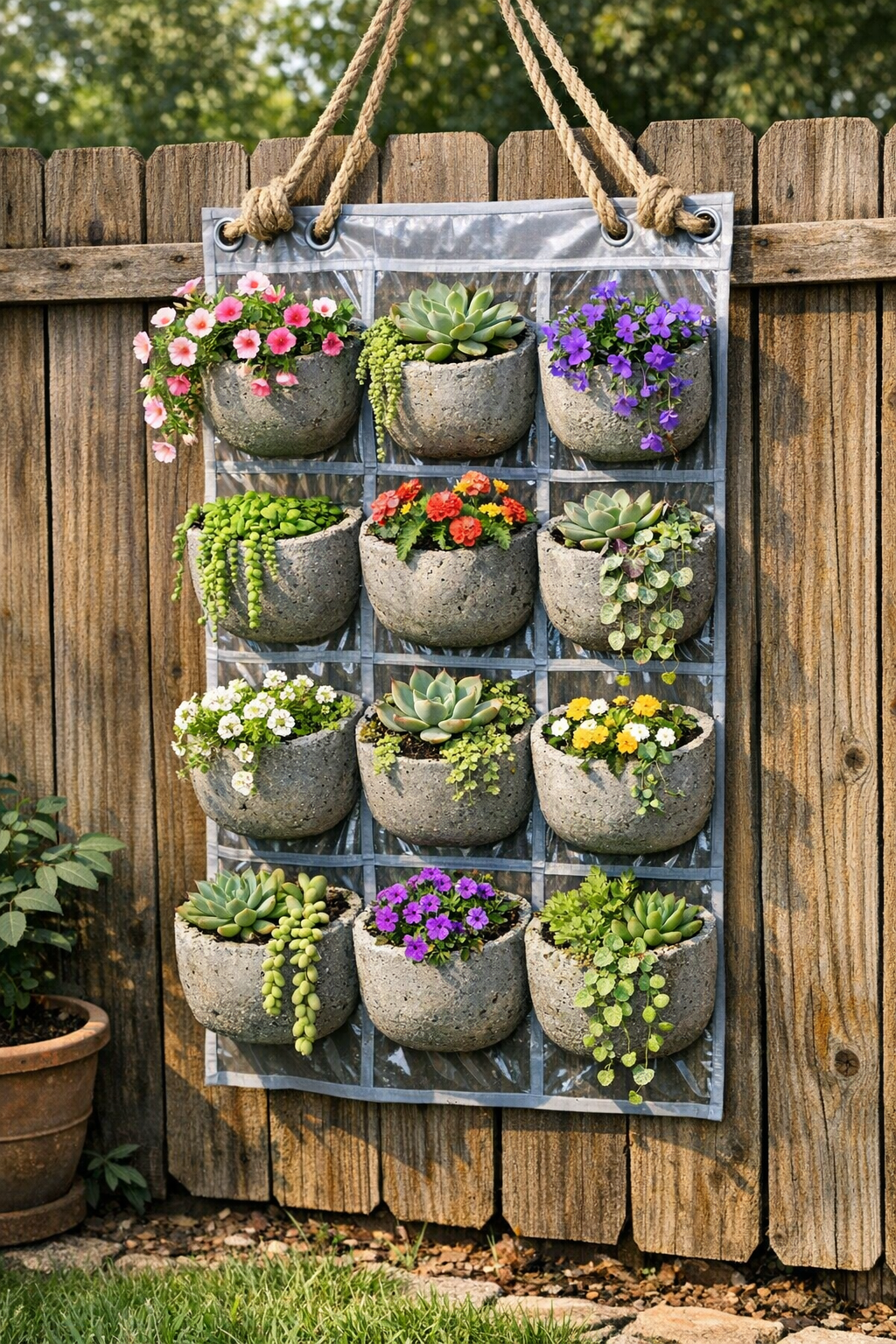
9. Hang the finished yard pods on a sturdy fence, pergola, or wall hook, then add lightweight potting soil and small plants to each pocket. Choose shallow-rooted plants so the organizer keeps its shape and doesn’t strain the hanging support.
Variations & Tips
Use fewer pockets: If you’re worried about weight, start with just the bottom 4 to 6 pockets filled with cement. That gives you the same look with less strain on the hanger.
Choose the right organizer: A thicker plastic organizer holds up much better than a flimsy one. If it feels brittle in your hands, it likely won’t manage the pull of wet cement.
Keep the cement thick: A soupy mix can bulge the pockets and make a mess. I’ve learned over the years that firmer mixes are usually kinder to unusual molds like this.
Hang low for testing: Before you trust it on a fence or wall, hang it just a foot or two off the ground overnight. If anything slips, it’s far easier to fix without a crash.
Plant lightly: Small succulents, trailing ivy, hens-and-chicks, or compact annuals are the best fit. Heavy, thirsty plants can add more weight than the organizer should carry.
Add rustic charm: Natural rope gives this project a country garden look that suits an old shed, porch post, or weathered fence beautifully. It has the same honest feel as the practical garden fixes I grew up seeing around Midwestern farmyards.