
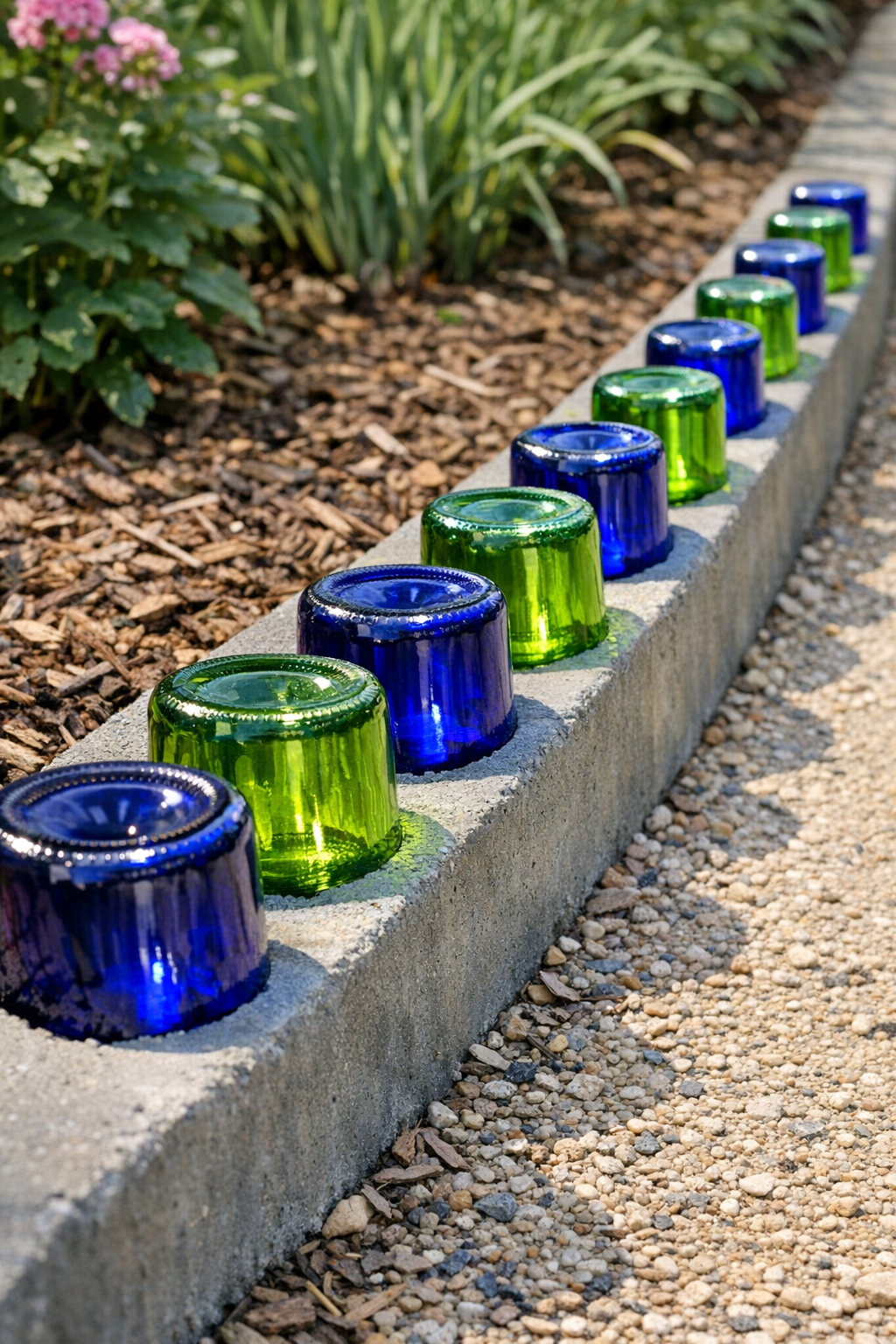
If you want a garden border that feels a little magical after sunset, this concrete edging with embedded glass bottles is such a satisfying weekend project. By setting blue and green wine bottles upside down into fresh concrete, you get a sturdy pathway edge by day and a soft, glowing effect at night when light catches the glass. It’s practical, eye-catching, and a lovely way to reuse bottles that might otherwise end up in the recycling bin.
I’m always drawn to projects that make the yard feel more welcoming without needing a lot of fuss later, and this one does exactly that. It’s a good fit for anyone comfortable with basic outdoor DIY, and it’s especially nice if you want a garden feature that looks handcrafted and special while still being durable enough for real family life.
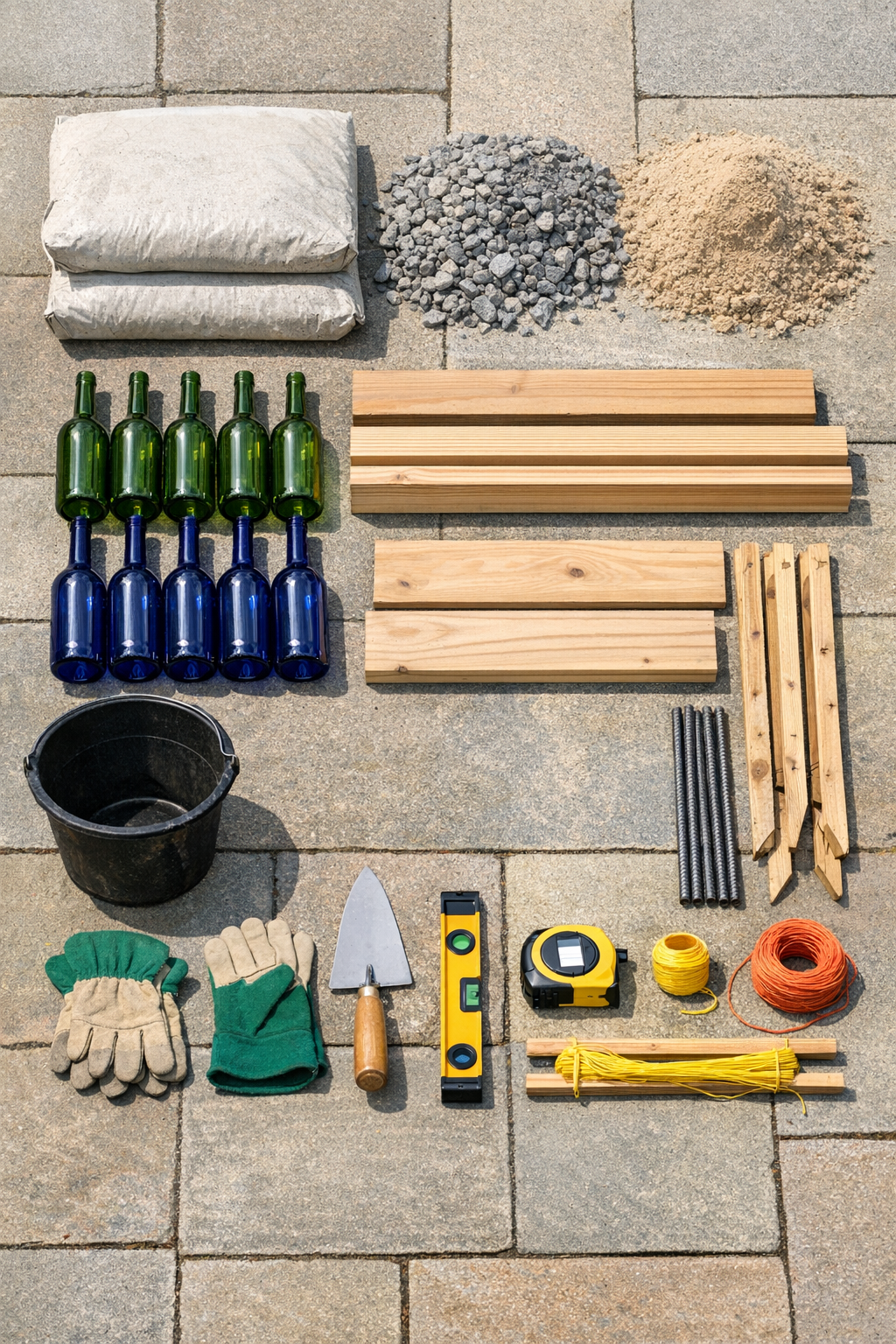
Materials
Instructions
1. Mark the border line with mason’s string or a garden hose, then measure the full run so you know how many bottles will fit with even spacing.
2. Dig a trench 10 feet long, about 6 inches wide, and 5 inches deep along the marked edge, keeping the bottom as level as you can.
3. Add 2 inches of crushed gravel to the trench and tamp it firmly so the edging has a stable base and is less likely to shift over time.
4. Spread a thin 1/2-inch layer of sand over the gravel and level it; this helps you fine-tune the height of the concrete bed.
5. Screw the 1x4 form boards in place along the trench, staking them every 2 to 3 feet and checking with a level so the top edge stays consistent.
6. Place the rebar pieces lengthwise in the trench, elevating them slightly on bits of gravel so they sit near the middle of the future concrete.
7. Dry-fit the bottles upside down inside the forms, spacing them about 8 to 10 inches apart to check the arrangement before you mix concrete.
8. Mix one bag of concrete at a time in a wheelbarrow to a thick, workable consistency; I like it just wet enough to hold together without slumping too fast.
9. Shovel concrete into the form until it is about halfway full, then tap the outside of the forms with a rubber mallet to settle air pockets.
10. Set each bottle upside down into the wet concrete, pressing it in slowly until the shoulder of the bottle sits above the finished edging line and the bottles feel anchored.
11. Fill in around the bottles with more concrete, packing gently with a margin trowel so there are no gaps, then smooth the surface with a finishing trowel.
12. Check each bottle for straightness and even height, adjusting while the concrete is still workable so the row looks intentional and tidy.
13. Wipe any concrete smears off the exposed glass with a damp sponge before the mix starts to harden; this cleanup is much easier now than later.
14. Let the edging cure undisturbed for at least 24 to 48 hours, then remove the forms and backfill soil neatly along both sides.
15. Rinse the bottles clean, add a solar spotlight nearby if you want more nighttime glow, and enjoy the finished border once the concrete has fully cured according to the bag directions.
Variations & Tips
Color mix: Use all blue bottles for a cooler, coastal look, or mix blue and green for a more natural garden feel. I think the mixed colors are especially pretty near herbs, hostas, and other leafy beds.
Night glow boost: The bottles will catch natural light on their own, but a small solar spotlight or low path light nearby makes the glass stand out much more after sunset.
Safer bottle prep: Only use intact bottles with no chips or cracks, and wash them thoroughly before starting. If I’m using saved bottles from gatherings, I inspect each one carefully because damaged glass is never worth the risk.
Shape options: This project works beautifully on gentle curves too, but flexible hardboard forms are easier than straight lumber if you want a winding path edge.
For picky style preferences: If your family likes a cleaner, simpler yard, space the bottles farther apart for a subtler effect. If everyone loves a bold look, place them a little closer together for more color and glow.
Cold-weather timing: Pour concrete on a mild, dry day when temperatures are safely above freezing. Concrete cures best when it isn’t rushed by harsh sun or stressed by cold nights.
Cleanup tip: Keep a bucket of clean water and a sponge right beside you while setting the bottles. A quick wipe as you go keeps the glass shiny and saves a lot of scrubbing later.