
There’s a particular satisfaction in turning something headed for the recycling bin into a hardworking household fix, and this project does exactly that. In this tutorial, I’m making simple shatterproof cabinet latches from empty plastic pill bottles and one other everyday material: wide rubber bands. The finished latch is flexible, tough, and especially handy for keeping curious kids, pets, or simply a stubborn cabinet door from swinging open.
I like projects like this because they sit right at the intersection of thrift and practicality. Much like saving vegetable scraps for stock, it’s a small act of resourcefulness that pays off immediately. This is a good beginner project if you’re comfortable working carefully with heat, and it’s ideal for utility cabinets, bathroom vanities, laundry rooms, or workshop storage where function matters most.
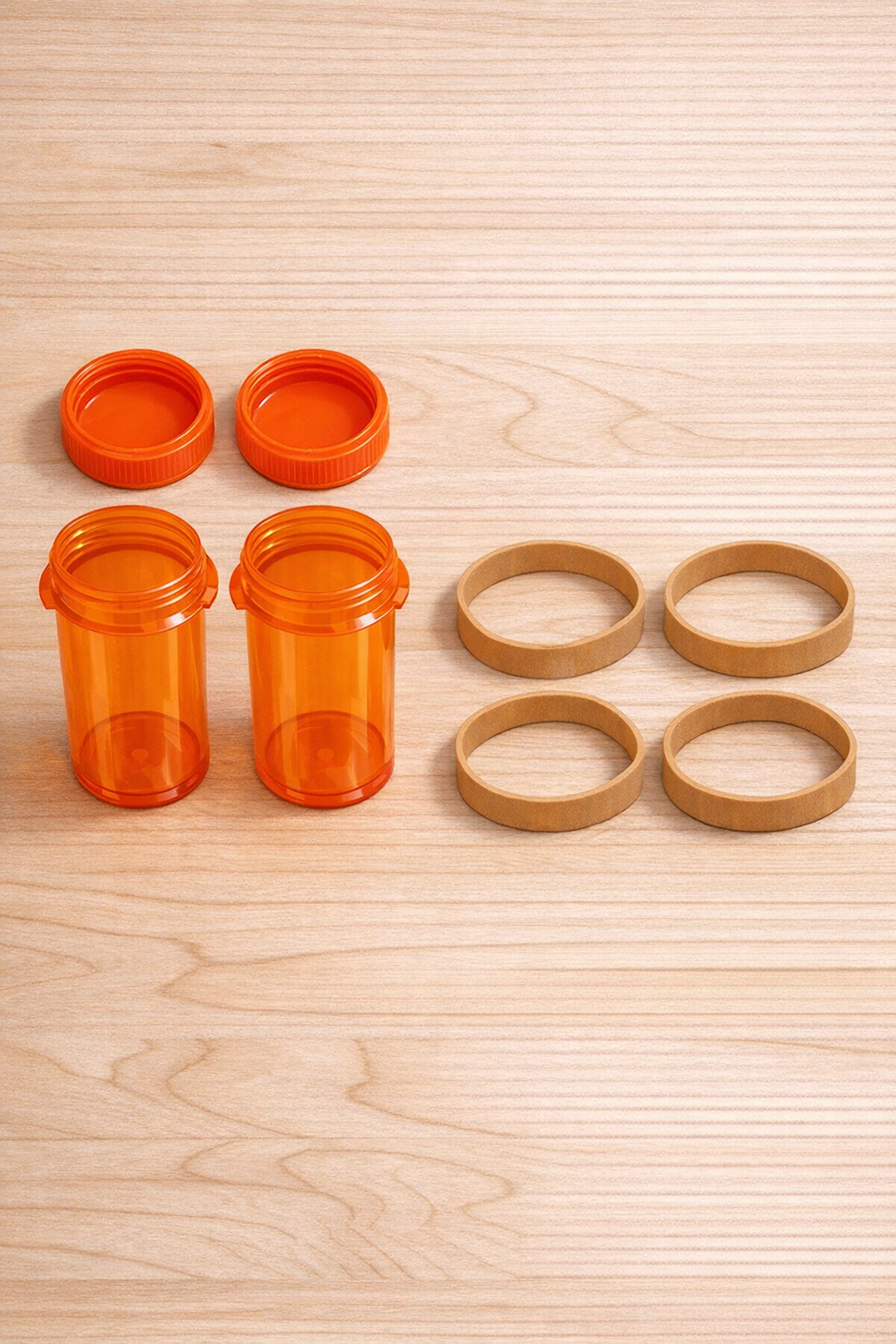
Materials
Instructions
1. Wash the pill bottles thoroughly with soap and warm water, remove any paper residue, and let them dry completely so the plastic heats evenly.
2. Cut the top and bottom off each bottle, then cut straight down the side to open each bottle into a flat sheet of plastic.
3. Warm each plastic sheet with controlled heat until it softens, then press it between two flat heat-safe surfaces until it cools into a thicker, flatter panel.
4. Cut each cooled panel into two latch straps measuring about 3 1/2 inches long by 3/4 inch wide, rounding the corners so they won’t catch on hands or fabric.
5. Cut a small horizontal slot about 1/2 inch long near each end of every plastic strap, placing each slot about 3/8 inch in from the edge.
6. Thread one rubber band through the slots on a strap so the band forms a loop on one side and anchors on the other, creating a flexible catch piece.
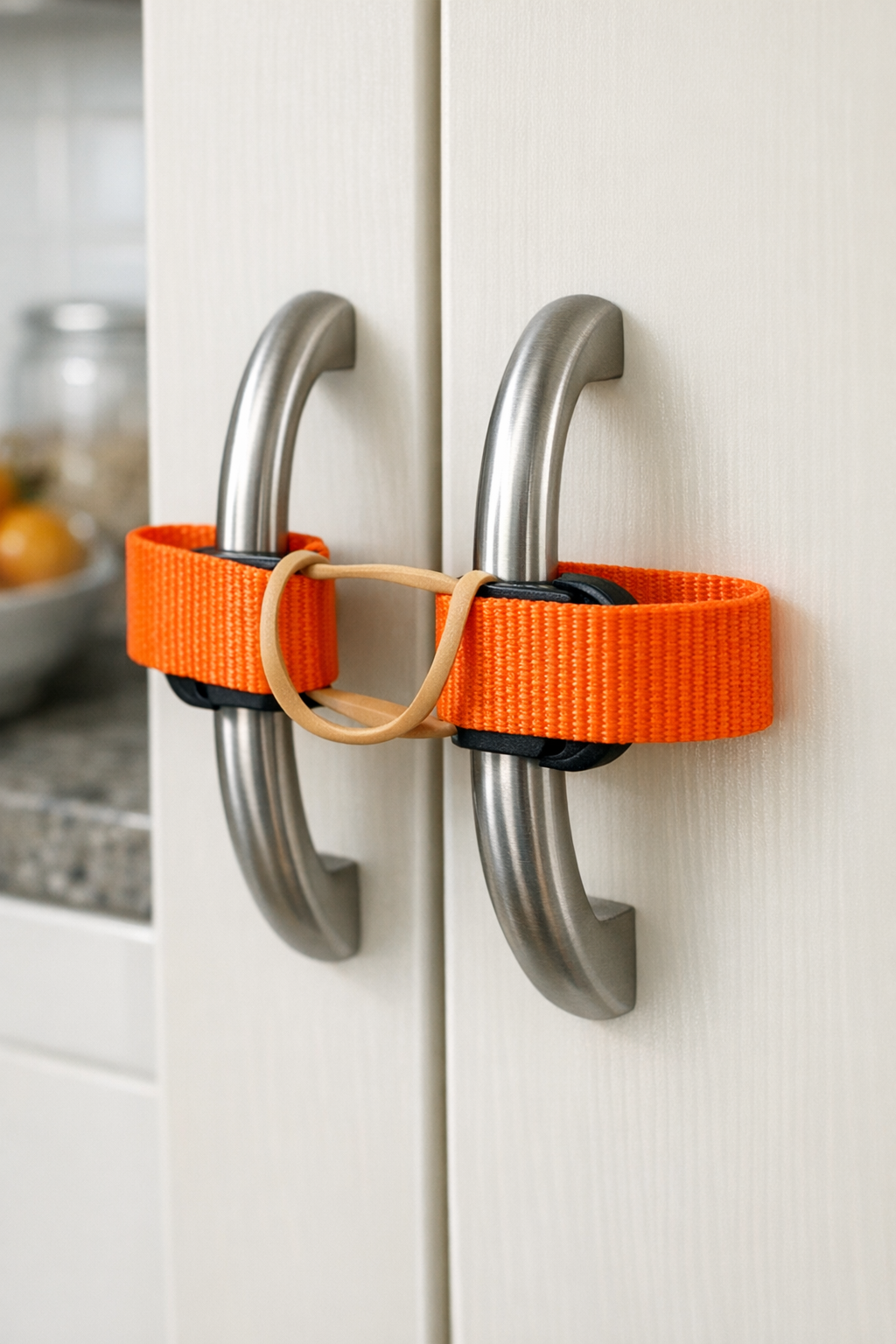
7. Slip the rubber band loop around one cabinet knob or handle, bend the plastic strap across the gap, and stretch the other end to hook around the opposite knob or handle.
8. Test the tension by opening and closing the cabinet gently; if needed, shorten the rubber band loop or trim a new strap slightly narrower for a snugger fit.
9. Make additional latches for other cabinets, matching the strap length to the distance between your handles so each latch stays secure without forcing the doors.
Variations & Tips
For round knobs: These latches work best when the rubber band can seat itself behind the knob head. If your knobs are small, use a slightly shorter band so the latch stays under tension.
For bar pulls: Make the plastic strap a bit longer, around 4 to 4 1/2 inches, so it spans the wider distance comfortably. I’ve found this matters the way handle spacing matters in a well-fitted pan lid: a little extra room prevents strain.
To make it stiffer: Reheat and press two layers of pill bottle plastic together before cutting the strap. That gives you a firmer latch body while still keeping some flexibility.
To make it softer on finishes: Double the rubber band where it touches painted or delicate hardware. This reduces rubbing and helps prevent scuffs over time.
Safety note: Heat plastic only with good ventilation and steady, low, controlled heat, and never use cookware or food-prep surfaces for this project. Let the plastic cool completely before handling and keep the finished latch away from teething children, since it is a utility item, not a toy.
Best use: This is ideal for light-duty cabinet security, not for heavy doors or for cabinets storing dangerous chemicals or medicines. For those, use a purpose-built child-safety latch installed according to the manufacturer’s directions.