
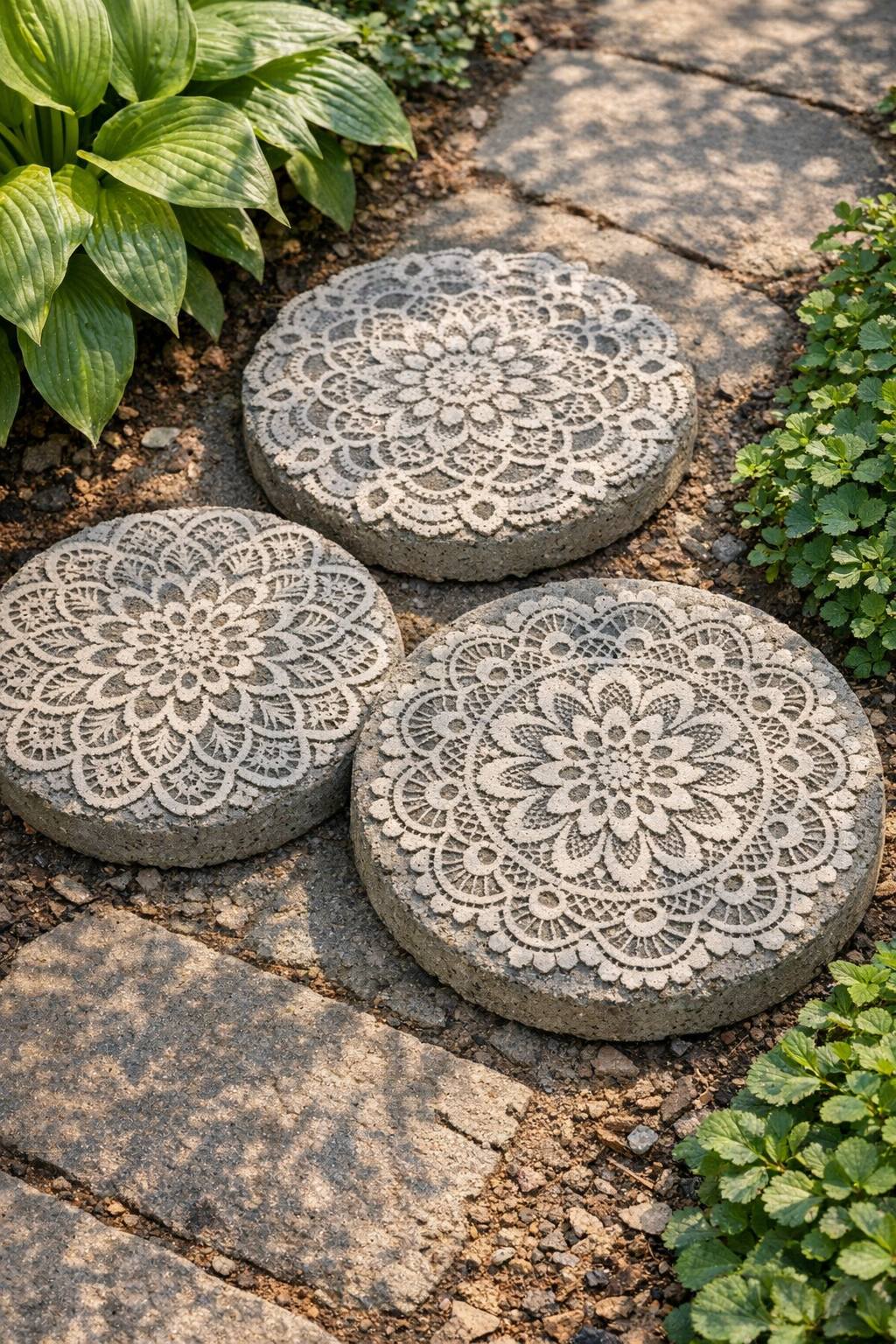
There’s something mighty satisfying about turning a few humble household items into something that looks like it came from a garden shop. These heavy patterned patio stones are made by pressing inexpensive vinyl lace placemats into wet cement, and the result is a set of textured stepping stones with all the charm of old-fashioned lacework. Around here, I’m always drawn to projects that make the porch, walkway, or flower beds feel a little more settled and welcoming, and this one does exactly that.
I especially like this project for beginners because it doesn’t ask for fancy tools or a workshop full of supplies. If you can stir, pour, and press gently, you can make these. They remind me of the practical sort of handiwork I grew up around in the Midwest, where folks knew how to take simple materials and make them feel special.
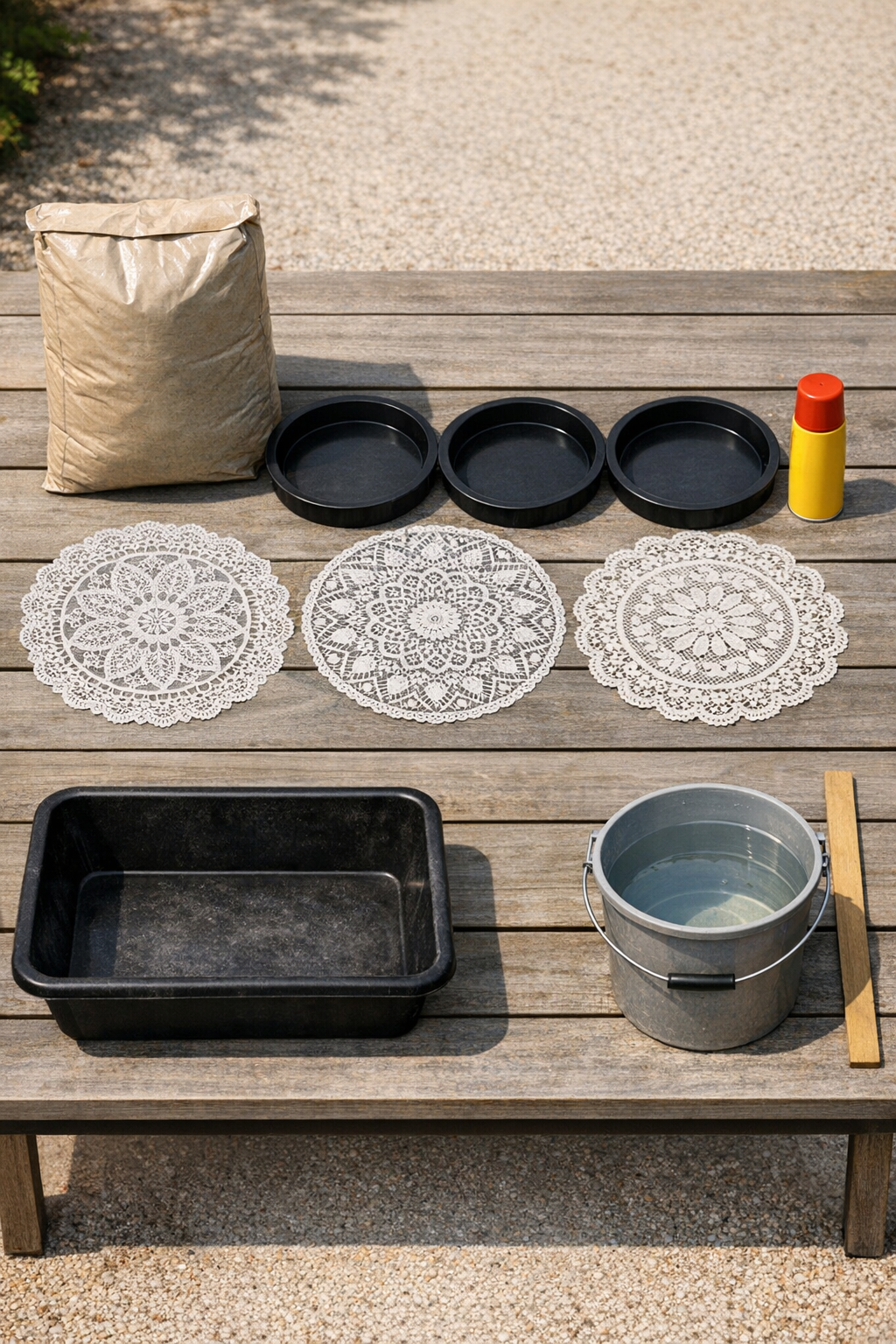
Materials
Instructions
1. Cover a flat work surface with a plastic drop cloth and set out your three molds where they can stay undisturbed for at least 24 hours.
2. Lightly coat the inside of each plant saucer or tray with cooking spray or a thin film of vegetable oil so the stones release more easily later.
3. Place one vinyl lace placemat in each mold, smoothing it flat so the pattern sits evenly against the bottom.
4. Pour the concrete mix into the mixing tub, then add water a little at a time and stir until it reaches the texture of thick oatmeal or brownie batter.
5. Fill each mold with about one-third of the wet concrete, then tap the sides gently to settle the mix and release large air bubbles.
6. Add more concrete until each stone is about 1 1/2 to 2 inches thick, then smooth the back with a piece of cardboard or putty knife.
7. Tap the molds again and give them a few gentle shakes to help the concrete settle firmly into the lace pattern.
8. Let the stones cure in the molds for 24 to 48 hours, or until they feel hard and cool with no soft spots in the center.
9. Turn each mold over onto a soft patch of cardboard or grass, then carefully lift away the tray and peel off the vinyl placemat.
10. Set the stones in a shaded spot to continue curing for another 5 to 7 days before placing them in the garden or on the patio.
Variations & Tips
For a weathered look: Once the stones have fully cured, brush a little watered-down gray, tan, or moss-green outdoor craft paint over the surface and wipe most of it off the raised areas.
For easier lifting: Keep each stone closer to 1 1/2 inches thick if you plan to move them around often. Thicker stones are sturdier, but they get heavy in a hurry.
For cleaner pattern detail: Choose placemats with a bold, open lace design instead of tiny fussy details. In my experience, the larger patterns show up much better in concrete.
Mold options: Cake pans, plastic drip trays, and large nursery saucers all work well as long as they’re shallow and sturdy. Just avoid anything you’ll want to cook with again.
Placement tip: These stones are prettiest when tucked into mulch, gravel, or a garden path where the pattern can catch the light. I like grouping all three together near a porch step or birdbath for an old-fashioned touch.
Cold-weather advice: If temperatures are chilly, let the stones cure indoors in a garage or enclosed porch where they won’t freeze. Concrete needs steady, moderate conditions to harden properly.