
I love a garden project that looks sculptural and substantial without asking you to be a professional mason, and these two wire-textured pedestals do exactly that. By pressing metal locker shelves into wet cement, you get a crisp industrial pattern that feels a little like vintage architectural salvage, and the secret extra ingredient gives the surface more character and strength than plain cement alone.
This is a wonderful weekend build for anyone who wants striking plant stands, lantern bases, or display pedestals for a patio or garden bed. I’m always drawn to projects that borrow texture from everyday materials, much like the way a good cook coaxes flavor from a humble pantry staple, and this one turns simple components into something that looks far more expensive than it is.
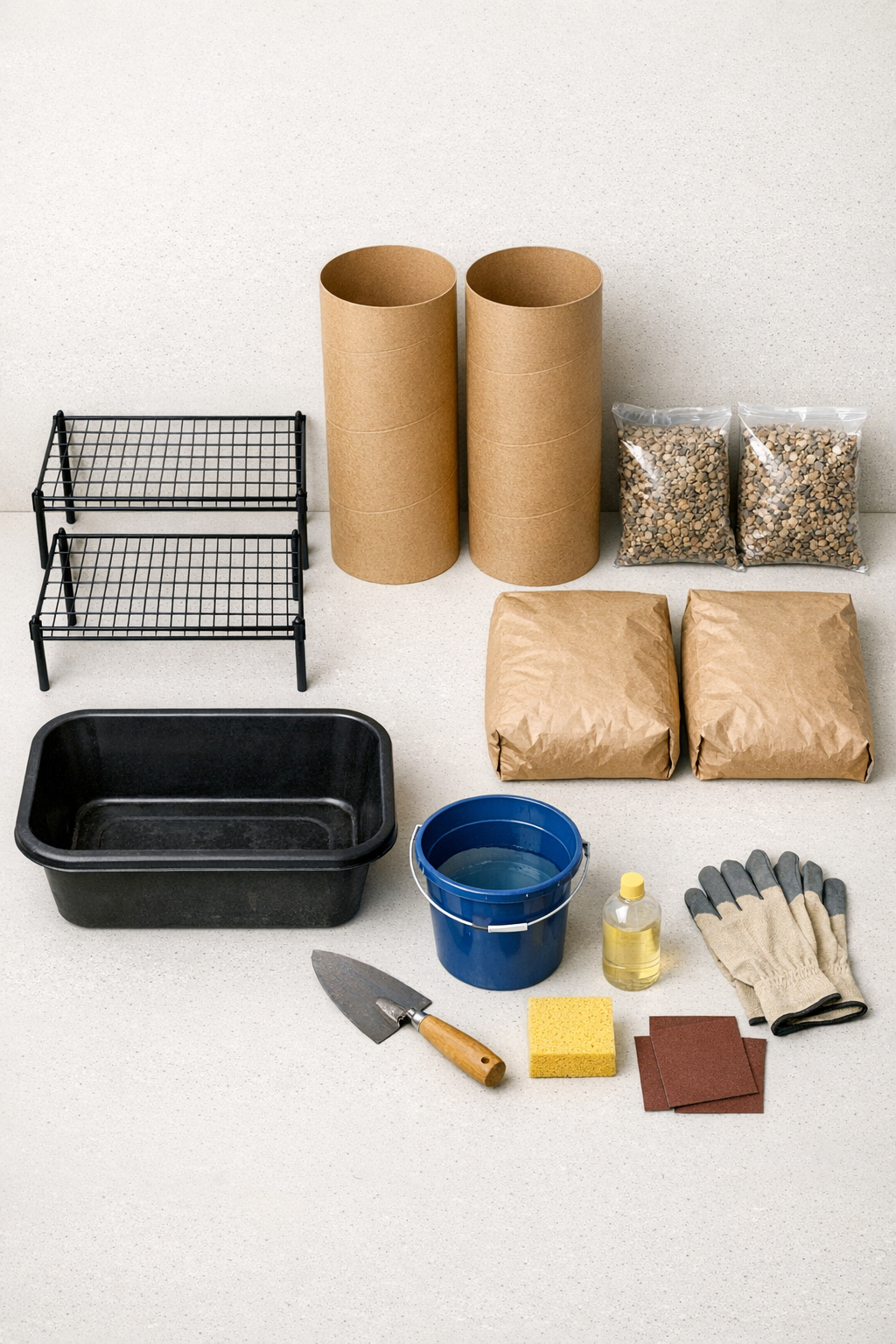
Materials
Instructions
1. Cover your work area with a plastic drop cloth and set each cylinder form on a 12-inch plywood base so the pedestals can cure without sticking to the ground.
2. Lightly coat the inside of the forms and one side of each locker shelf with cooking oil or mold release so the cement and metal release cleanly later.
3. Cut or bend the locker shelves into panels that wrap around the inside wall of each form, overlapping the ends by 1 to 2 inches if needed for a snug fit.
4. Tape the locker shelf in place inside each form with the textured side facing inward toward the wet cement so it will imprint the pedestal surface.
5. In a mixing tub, combine the fast-setting concrete mix, sand topping mix, and pea gravel, then stir in pigment if you want a darker stone-like color.
6. Add water gradually and mix until the cement is thick like stiff oatmeal; then stir in the plain yogurt thoroughly, which helps create a subtly aged, stonewashed finish as the surface cures.
7. Shovel the cement mixture into each form in 3-inch layers, pressing firmly against the locker shelf lining so the wire pattern transfers sharply.
8. If you want extra reinforcement, place a looped piece of galvanized wire into the center of each pedestal after the first few inches of fill, then continue packing cement around it.
9. Fill each form to the top, tap the sides several times to release air bubbles, and smooth the top surface with a trowel.
10. Let the pedestals set undisturbed for 24 hours, then carefully peel away the outer form and pull out the locker shelf liner to reveal the heavy wire texture.
11. Allow the pedestals to cure for another 3 to 5 days, lightly misting them once or twice a day if the weather is hot or dry to reduce cracking.
12. Sand any sharp edges, attach optional felt or rubber pads to the bottoms, and move the finished pedestals into place for planters, lanterns, or garden sculpture.
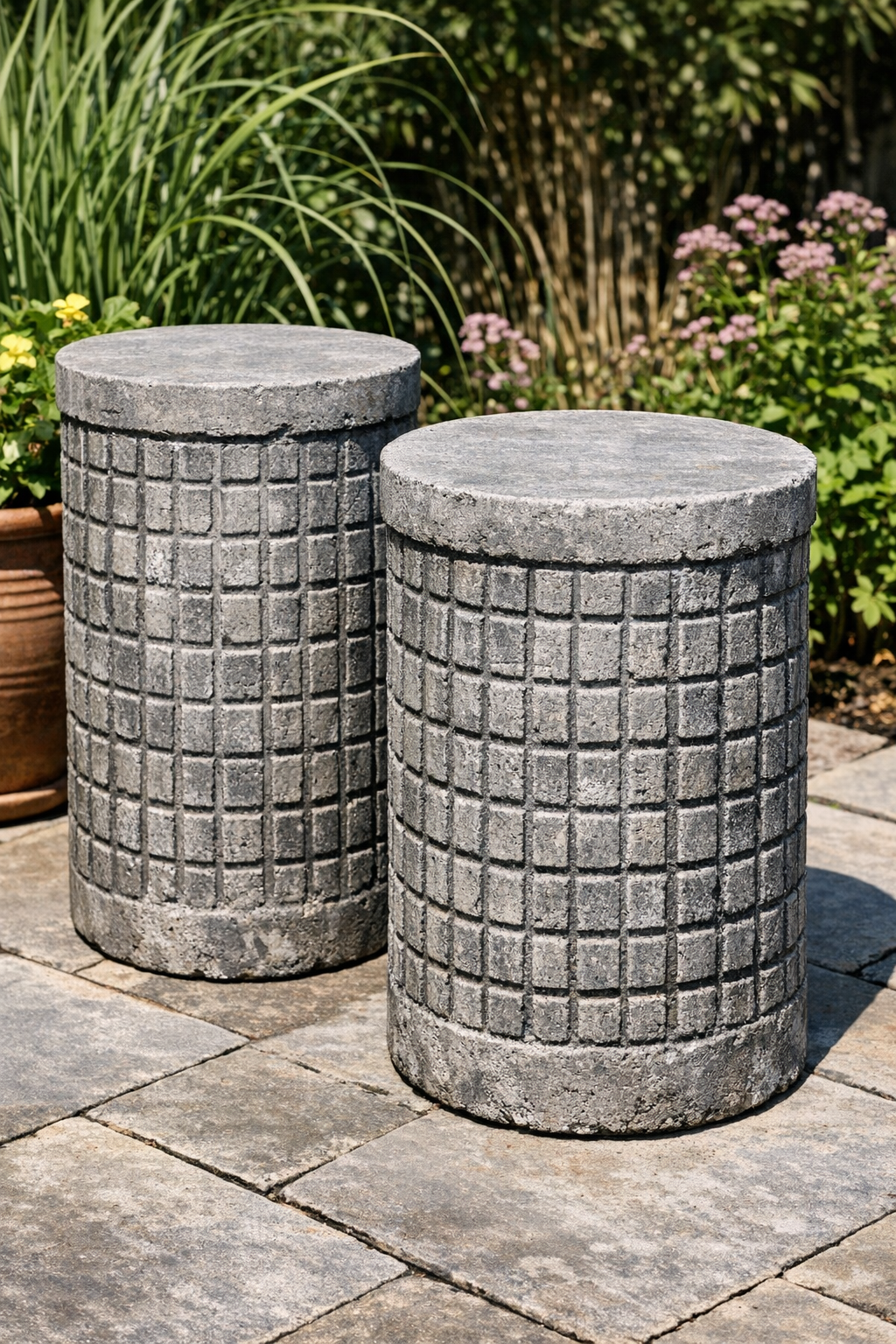
Variations & Tips
Shape change: Use square planters or box forms instead of round ones if you want a more architectural pedestal with sharper lines.
Color option: Charcoal, terracotta, or buff cement pigment can completely change the mood; I like charcoal for a modern look and warm buff for cottage-style gardens.
Texture control: Press the cement especially firmly into the locker shelf during filling if you want a stronger grid pattern; a looser pack gives a softer, more weathered impression.
Form substitute: If you cannot find locker shelves, heavy wire closet shelving with a similar grid works well, as long as it is rigid enough to hold its shape.
Weather tip: Avoid pouring in direct hot sun or freezing temperatures, because cement cures best slowly and evenly.
Display idea: Make the second pedestal slightly taller or wider than the first for a collected, designer look when grouping potted herbs, trailing flowers, or a lantern pair.