
I’ve always had a soft spot for practical projects that solve a real problem without sending you off to buy some overpriced gadget, and these heavy teardrop yard weights do exactly that. If your outdoor decorations, canopy legs, sports nets, or patio setup have a habit of scooting around every time the wind kicks up across the yard, this is the kind of simple fix that feels downright satisfying to make with your own two hands.
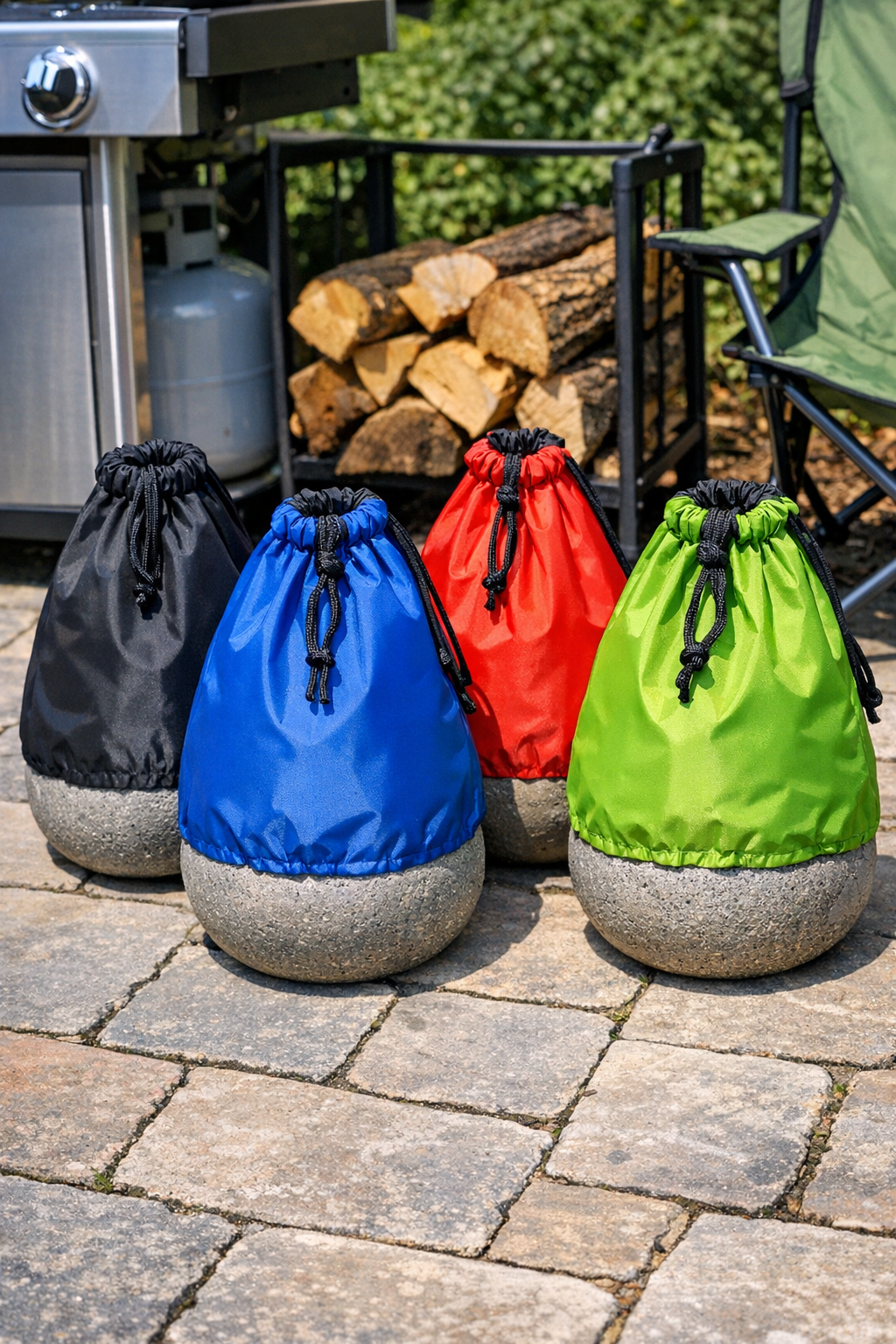
What I like most about this project is how little it asks of you: a nylon drawstring backpack, cement, and one more simple filler item to give the weight some body and shape. The finished result is sturdy, weather-friendly, and easy to loop, hang, or tie where you need it. It’s a good beginner project, and it reminds me of the sort of thrifty, useful make-do solutions folks around here have always come up with when they needed something solid and dependable.
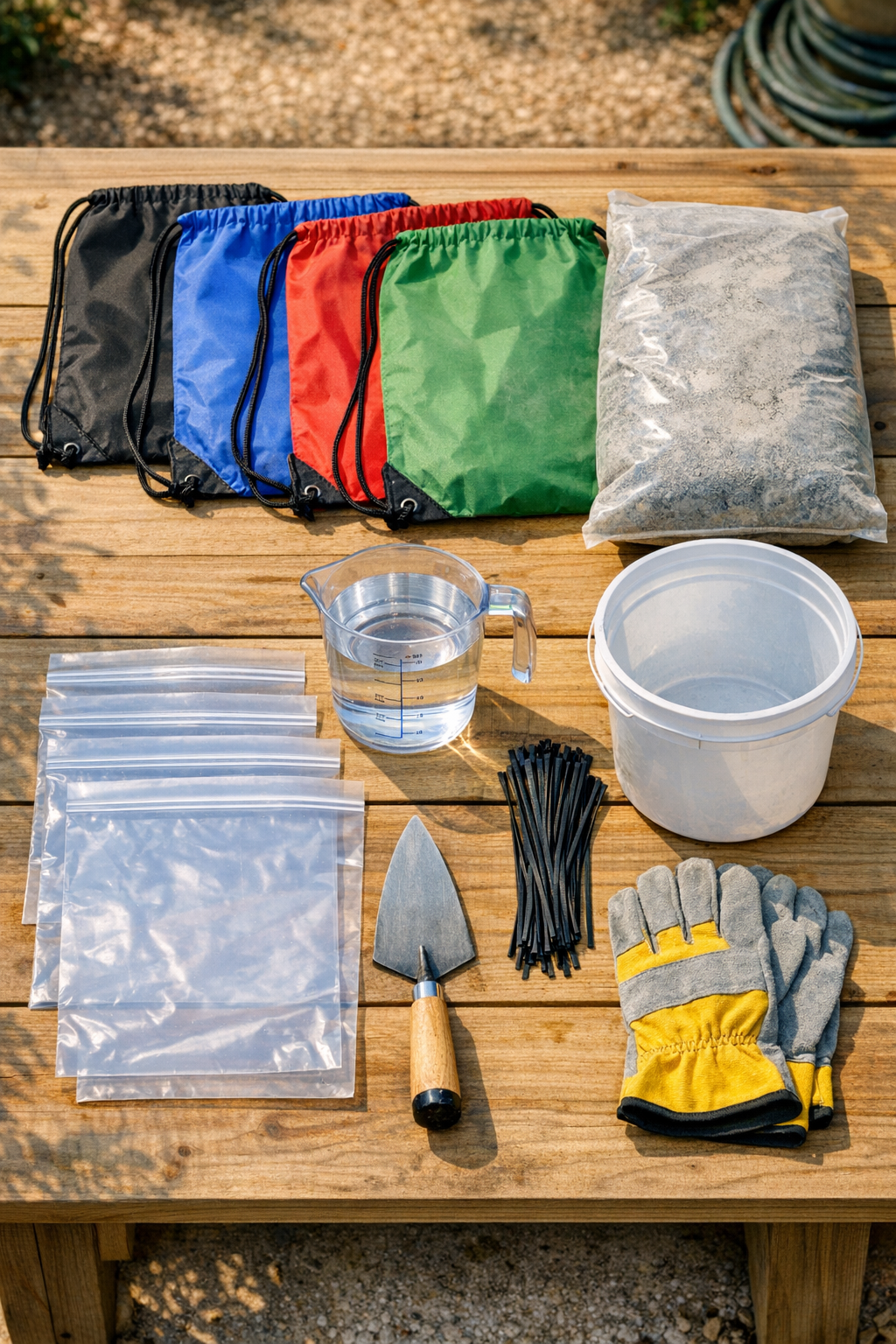
Materials
4 nylon drawstring backpacks, adult size, approximately 14 x 18 inches each
Instructions
1. Spread your drop cloth in a flat outdoor work area and put on gloves and a dust mask before opening the cement mix. Set out the backpacks so the drawstrings are untangled and ready to hold their shape.
2. Place one gallon-sized plastic bag inside each nylon drawstring backpack, pressing it down into the bottom so it forms a rounded pouch. This inner bag helps contain the wet cement while the outer backpack gives the finished weight its durable shell.
3. In the mixing bucket, combine about 12 to 13 pounds of fast-setting cement mix with roughly 3 cups of water for the first weight. Stir until it reaches the texture of thick oatmeal, moist enough to pack but not runny.
4. Scoop the wet cement into the lined backpack until it is about two-thirds full, then gently tap the bottom on the ground to settle the mix. Keep the top section of the backpack clear so you can form the teardrop neck.
5. Gather the plastic liner bag above the cement and twist it closed tightly, then secure it with 2 zip ties. This keeps moisture in while the cement cures and helps the weight hold a smooth, rounded shape.
6. Pull the nylon backpack fabric up around the filled liner and cinch the drawstrings snugly right above the cement-filled section. Tie the strings firmly so the top forms a compact handle or hanging loop.
7. Shape the bottom with your hands so it sits rounded and even, then leave the weight upright to cure according to the cement package directions, usually 24 hours for a solid set. Repeat the same process for the remaining 3 backpacks.
8. After curing, test each weight by lifting it with the drawstring loop and setting it beside the item you want to anchor. If needed, tie or clip the loop around canopy legs, yard décor bases, or lightweight outdoor frames.
Variations & Tips
Use pebbles for extra heft: If you want even more weight without using more cement, add 1 to 2 cups of clean pea gravel into the bottom of each liner before the wet mix goes in. That little trick gives the base a nice solid feel.
Choose darker backpacks: Black, navy, or dark green nylon tends to hide cement dust and outdoor dirt better over time. Around my place, anything that saves on scrubbing is worth considering.
Match the weight to the job: For small garden flags or light décor, use about 8 to 10 pounds of cement per bag. For canopy legs or sturdier frames, aim closer to 12 to 15 pounds per bag.
Let them cure fully: Even if the outside feels firm, give the weights a full day before putting them into regular use. Cement that cures slowly and evenly will hold up better through the season.
Add a clip if needed: A carabiner clipped through the drawstring loop makes these easier to attach and remove. It’s a handy little improvement if you move your yard setup around often.
Store them dry in winter: If you live where freeze-thaw weather is common, tuck the weights into a shed or garage when the season ends. That bit of care helps the fabric and the cement last longer.