
If you want a backyard project that looks polished but still feels wonderfully doable in an afternoon, this hanging herb planter is one of my favorite kinds of DIY. You’re taking simple aluminum rain gutters, painting them a crisp color, and threading thick rope through them to create a tiered planter that hangs right on a fence. It gives you a neat vertical garden without taking up precious patio space, and it’s especially handy if you love stepping outside to snip fresh basil, parsley, or mint for dinner.
I’m always looking for ways to make outdoor spaces feel useful and welcoming, especially when they can help with mealtime. This project is perfect for beginners, renters with a fence they’re allowed to decorate, or anyone who wants a clean, cottage-meets-coastal look in the backyard. I also love that you can tailor the herbs to your family’s tastes, including a few dependable favorites for picky eaters who might be more willing to try “their” own homegrown garnish.
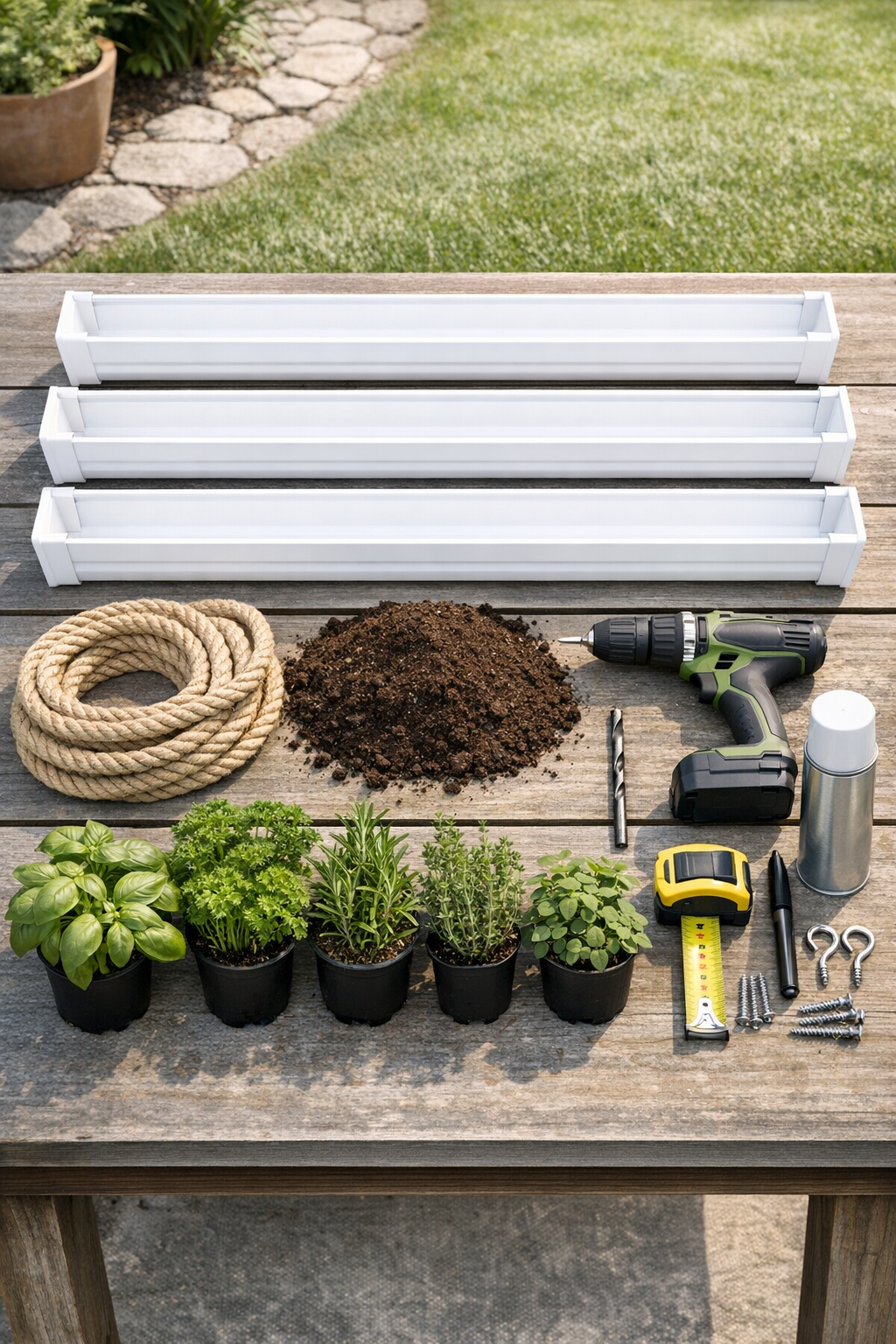
Materials
Instructions
1. Wipe the gutters clean and lightly sand the outside surfaces so the paint will grip better. Tape off any areas you don’t want painted and set the pieces on a drop cloth.
2. Spray the gutters and end caps with thin, even coats of white exterior paint, letting each coat dry before adding the next. Paint all visible sides for a finished look once they’re hanging.
3. Attach an end cap to each end of all three gutters using the small pan-head screws. Keep the screws near the upper edge of the gutter so they don’t interfere much with soil space.
4. Measure 2 inches in from each end and mark one hole near the top rim on both sides of every gutter. Drill the rope holes with the 1/2 inch metal bit, then drill 4 to 6 small drainage holes along the bottom of each gutter with the 1/8 inch bit.
5. Cut or seal the rope ends if needed so they won’t fray, then thread one rope through the left-side holes of all three gutters and the second rope through the right-side holes. Lay the planters flat as you work so the ropes feed through evenly.
6. Tie a large knot under the bottom gutter on each rope side, then add knots above and below the middle and top gutters to hold them at your desired spacing. I like leaving 12 to 14 inches between tiers so the herbs have room to grow and you can water them without a mess.
7. Hold the assembled planter against the fence and mark where the two top rope loops will hang. Install the heavy-duty hooks into solid fence supports, not just thin pickets, so the weight is carried safely.
8. Hang the rope loops on the hooks and adjust the knots until each gutter sits level. Take your time here, because straight planters make the whole project look much more polished.
9. Fill each gutter about two-thirds full with potting mix, then nestle in the herb plants and add more soil around the roots. Plant 3 herbs per gutter so they have enough room to spread without crowding.
10. Water the planters gently until moisture begins to drain from the bottom holes, then wipe away any spilled soil from the painted edges. Check the ropes and hooks one more time after watering, since the added weight can shift things slightly.
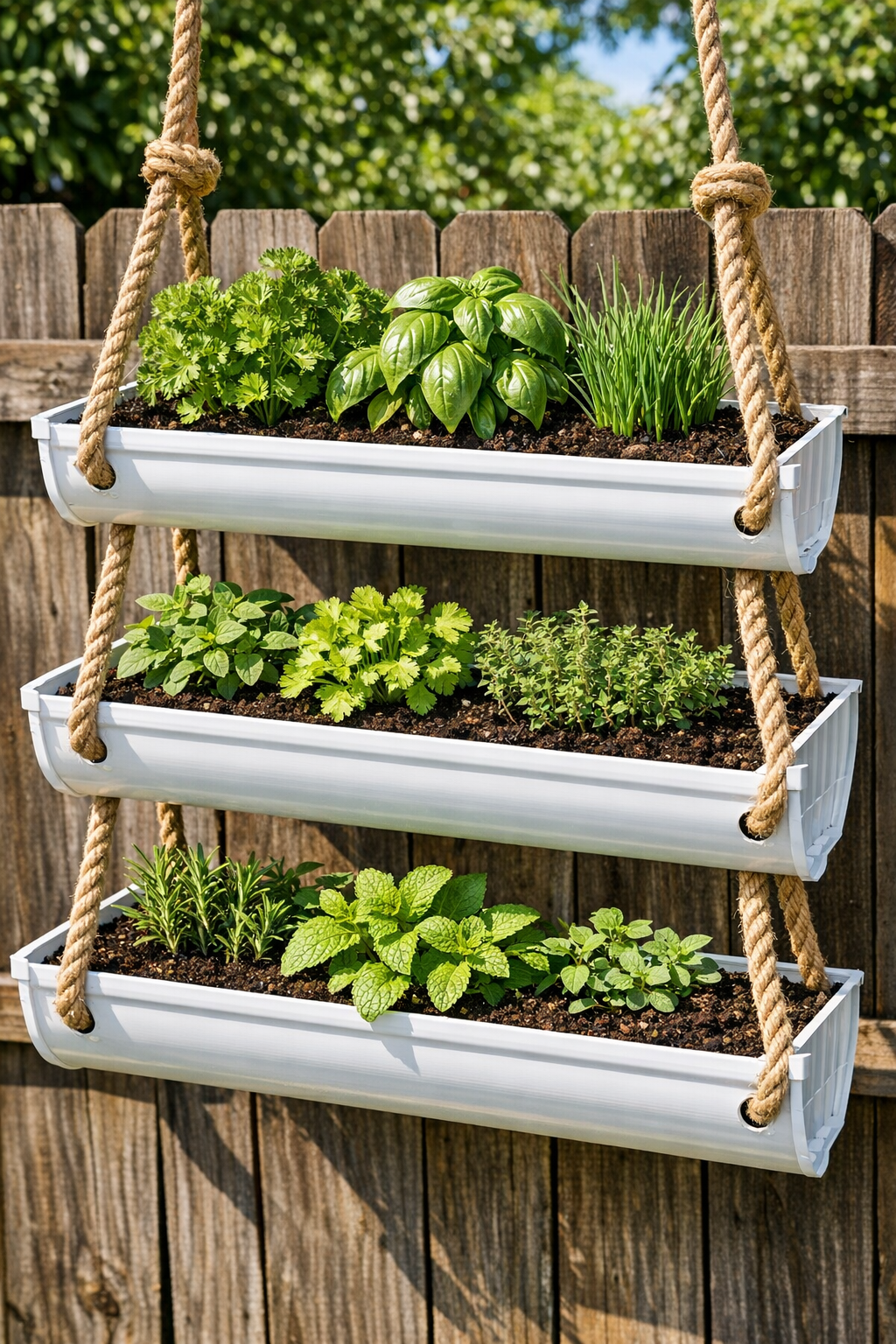
Variations & Tips
Best herbs to grow: Basil, parsley, chives, thyme, oregano, and mint all do well in this kind of shallow planter. I usually keep mint by itself if I can, because it likes to take over.
For picky eaters: Plant familiar herbs your family already recognizes from favorite meals, like basil for pasta night or chives for baked potatoes. Kids are often much more excited to taste a “garden topping” they helped water.
Paint color ideas: White gives this planter a fresh, clean look, but black, sage green, or soft blue can also be beautiful against a wood fence. Choose an exterior paint rated for metal so it holds up through the season.
Drainage tip: Don’t skip the bottom holes, even if the planter is under a covered patio. Good drainage helps prevent soggy roots and keeps herbs much happier in narrow containers.
Rope choice: Synthetic nautical rope handles outdoor moisture better than natural cotton rope. If you prefer a softer, more rustic look, just know natural rope may weather faster and need replacing sooner.
Fence safety: Once the gutters are filled with damp soil, this planter gets heavy. Always anchor the hooks into sturdy fence rails or posts, and if your fence feels flimsy, mount the planter to a wall or freestanding frame instead.
Seasonal swap: When herb season winds down, you can replant the gutters with trailing flowers, lettuce, or strawberries. That’s one of the reasons I love this project so much—it’s practical for the kitchen and pretty enough to enjoy all year.