
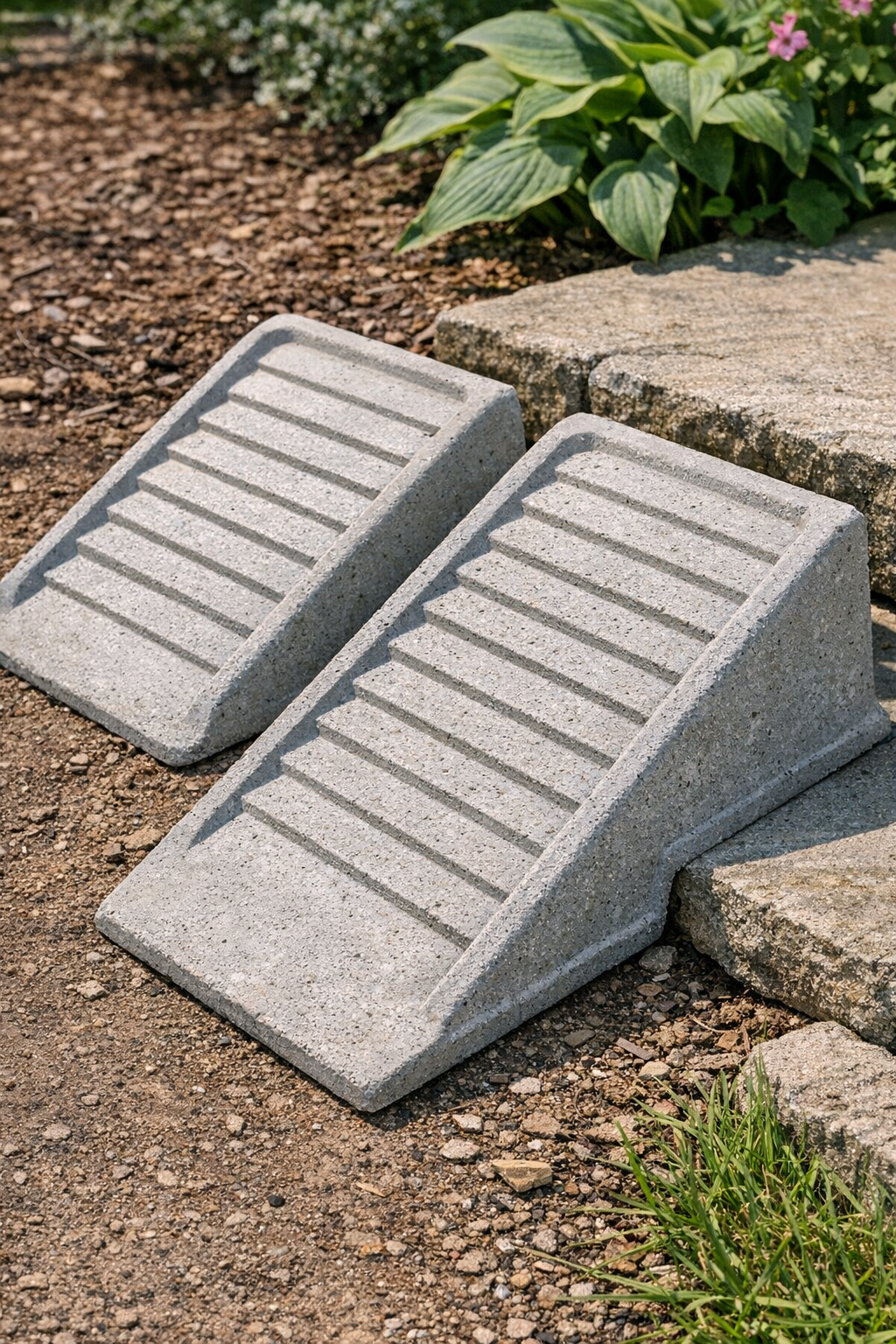
I love a project that turns something headed for the garage trash pile into something genuinely useful, and this one does exactly that. By filling old plastic paint roller trays with thick cement, you can make sturdy little ridged garden ramps that help wheelbarrows, garden carts, lawn tools, or even hoses roll more easily over a raised threshold, shed lip, or small step.
If you garden on a schedule like I do—usually squeezing outdoor chores into evenings after work—anything that saves a little effort is worth making. These ramps are simple, inexpensive, and naturally come out with a grippy ridged surface because of the paint tray shape, which is honestly the part I find most satisfying.
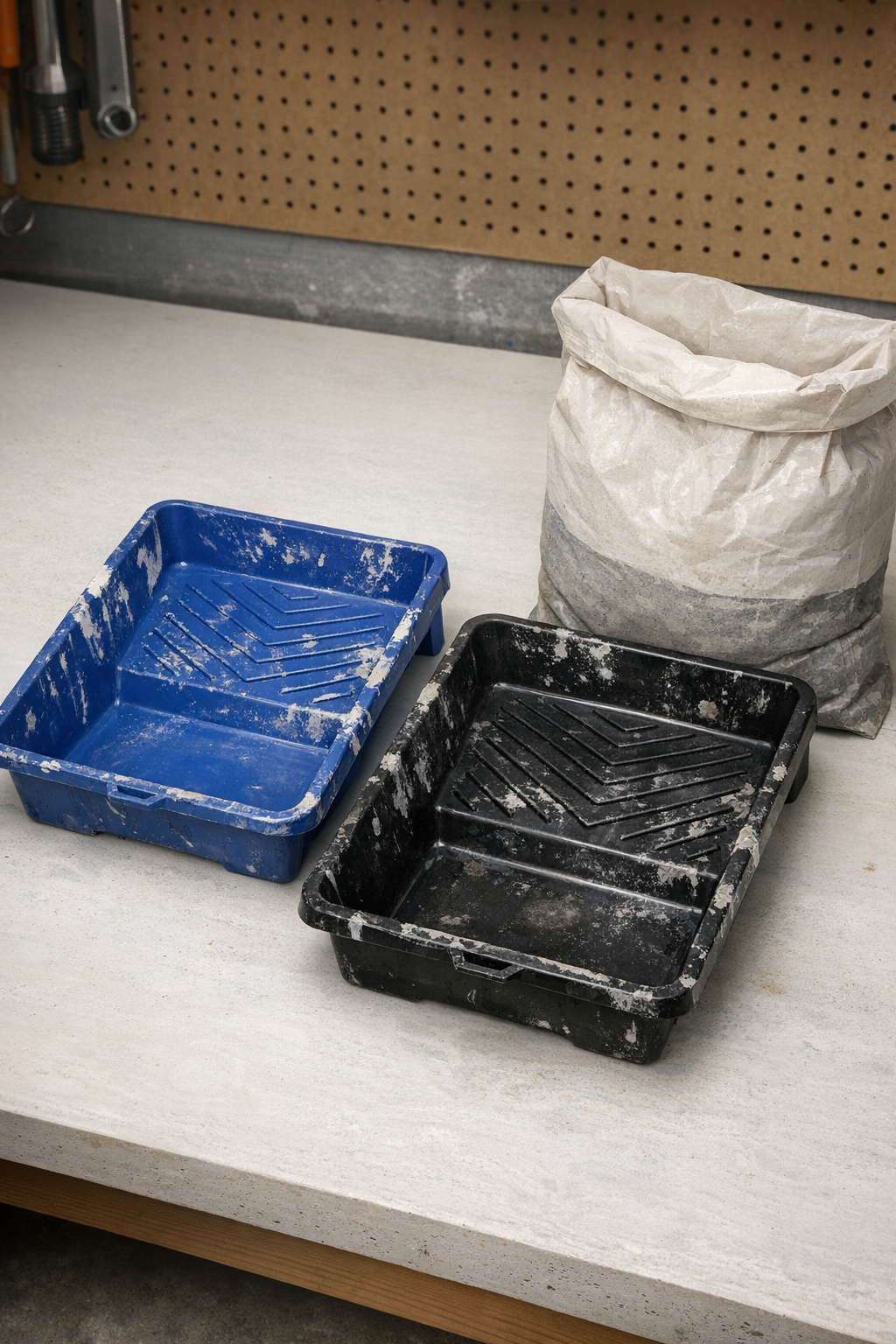
Materials
Instructions
1. Set the paint trays on a flat, level surface protected with a plastic drop cloth, and check that both trays sit evenly so the finished ramps cure without twisting.
2. Lightly coat the inside of each tray with nonstick spray or a thin wipe of vegetable oil so the plastic form is easier to peel away later.
3. Pour the cement mix into a bucket or mixing tub and add water a little at a time until you get a very thick, scoopable consistency, similar to stiff oatmeal.
4. Scoop the thick cement into the deep well of each paint tray first, then press it firmly into the sloped ridged section so the entire tray is filled edge to edge.
5. Tap the sides of the trays several times and gently shake them to release trapped air bubbles, then smooth only the back edge if needed while leaving the front ridges intact for traction.
6. Let the trays sit undisturbed for 24 to 48 hours, or until the cement is firm enough to hold its shape without flexing when you touch the plastic.
7. Carefully peel or cut away the plastic trays from the hardened cement, working slowly around the edges so the ramps do not chip.
8. Cure the ramps for another 3 to 5 days in a dry shaded area before using them, then place them with the thin end facing outward wherever you need an easy transition over a garden edge or threshold.
Variations & Tips
For heavier-duty use: If you plan to roll a loaded wheelbarrow over these often, make the cement mix extra stiff and pack it tightly into the corners to reduce weak spots.
For easier release: Older trays sometimes crack while demolding, which is totally fine; I usually treat them as single-use molds and just cut them away with utility scissors if needed.
For a neater bottom edge: After filling the trays, scrape the back flat with a scrap board so the thick end of each ramp sits more evenly on the ground.
For placement: These work best for small height changes like shed thresholds, raised garden bed edges, low steps, or a lip at the end of a walkway.
Weather tip: If it is very hot or windy, cover the filled trays loosely with plastic while they begin curing so the surface does not dry too fast and crack.
Make a matching pair: I like making two at once so I can line them up for cart wheels, which makes trips between the patio and garden beds feel much smoother.