
If you have a piece of furniture that needs to slide more easily but you do not want to invest in bulky hardware, this simple caster-style hack is a surprisingly useful fix. The idea here is to soften old cracked golf balls in boiling water, then turn them into smooth, rounded floor glides with just two other common household items. It is a smart little upcycling project, and I love anything that gives worn-out odds and ends one more job before they head to the trash.
As someone who is always trying to make my kitchen and storage areas work harder without adding another errand to my week, this kind of project really speaks to me. It is best for utility pieces like storage bins, lightweight plant stands, small carts, or workshop items that need help moving across hard floors. I would not use it for anything you sit on or for extra-heavy furniture, but for practical around-the-house use, it is a fun and genuinely handy DIY.
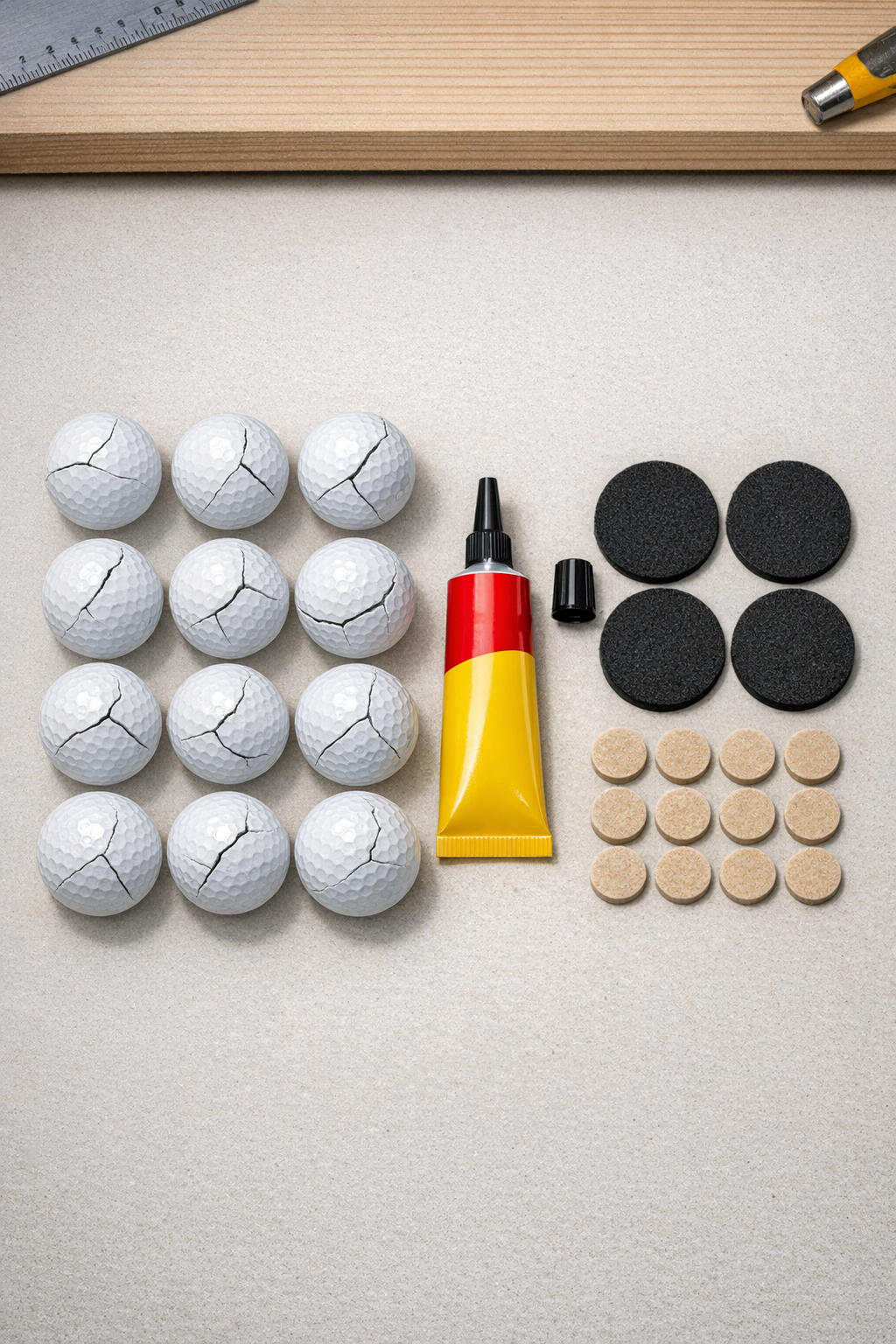
Materials
4 cracked golf balls
Instructions
1. Fill a medium pot with enough water to fully cover the golf balls, then bring it to a gentle boil. Add the cracked golf balls and boil them for 8 to 10 minutes until they soften slightly.
2. Carefully remove the golf balls with tongs or a slotted spoon and let them cool just enough to handle. While they are still warm and slightly pliable, press each one gently to check that the cracked area can flex a little.
3. Apply a generous dab of adhesive to the center of each furniture pad. Set one warm golf ball onto each glued pad with the smoothest, roundest side facing outward.
4. Hold each golf ball in place for 30 to 60 seconds so it bonds well and sits centered on the pad. Wipe away any excess glue around the base before it sets.
5. Let the assembled casters cure flat on a protected surface for the full drying time listed for your adhesive, usually 12 to 24 hours. Do not rush this step, because full cure makes a big difference in durability.
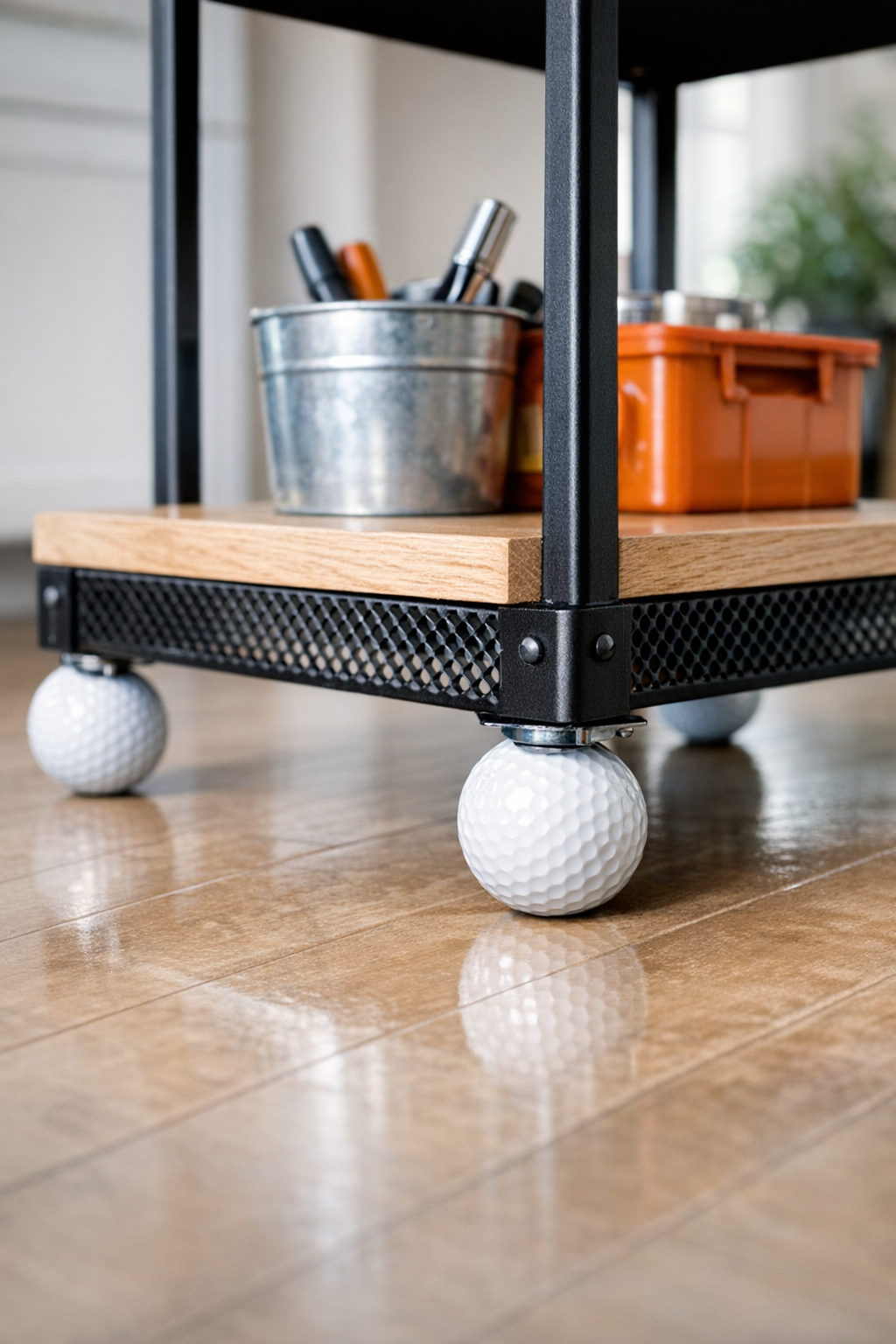
6. Once fully cured, attach one caster under each corner of your lightweight furniture piece or storage item. If your pads are adhesive-backed, peel and stick them in place; if not, glue them securely to the underside and let them set before use.
Variations & Tips
Best use: These work best on smooth flooring like vinyl, laminate, sealed concrete, or tile. I would skip them on thick carpet or rough outdoor surfaces where the golf balls cannot glide cleanly.
Furniture weight: Keep this project for lighter-duty pieces like rolling bins, laundry sorters, plant stands, or small storage carts. If an item is truly heavy-duty in the hardware-store sense, real casters are still the safer choice.
Adhesive choice: A thicker construction adhesive usually gives a stronger hold than basic school or craft glue. If I am making something for a garage or mudroom, I always choose the strongest household adhesive I already have on hand.
Golf ball condition: Cracked balls are actually helpful here because the heat lets them relax a bit more easily. Just make sure they are still mostly intact and not crumbling.
Surface protection: Test one finished caster on an unseen area of flooring before committing to all four. That is my standard rule with any quick home hack, especially when I am trying it in a busy kitchen or storage area and do not want surprise scuffs later.