
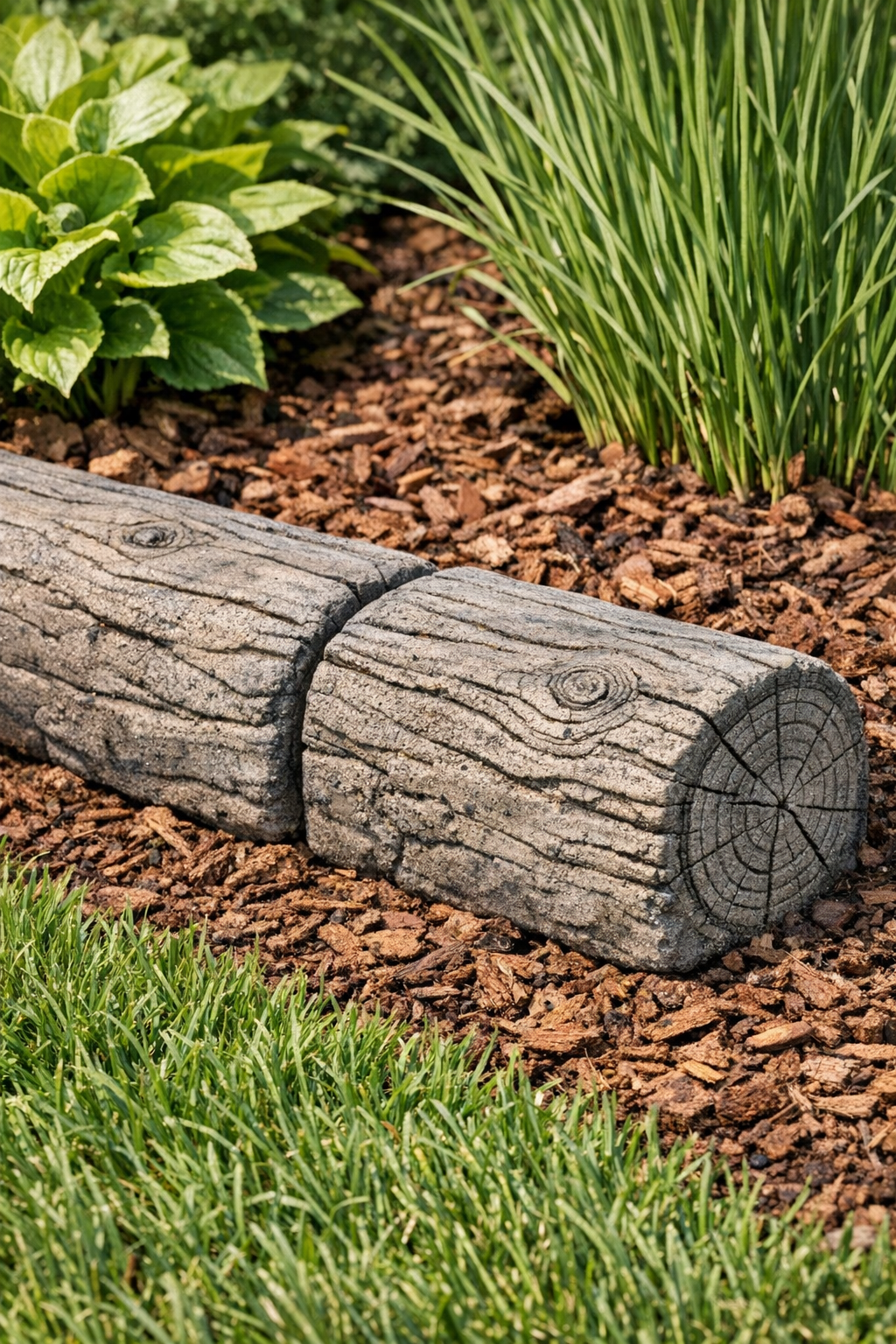
I love a garden project that looks surprisingly polished but starts with something as ordinary as a kitchen item. In this case, rolled silicone baking mats become the mold for sturdy faux border logs, and when you pair them with cement plus one simple hidden core, you get heavy landscape edging that reads like chunky rustic wood from a distance. It’s an inexpensive way to define a bed, line a path, or hold mulch neatly in place.
This is a good project for anyone who wants durable yard edging without cutting real timber or hauling massive stone. Because I spend so much time in the kitchen, I’m always amused when cookware crosses over into outdoor making, and silicone is especially useful here because cured cement releases from it beautifully.
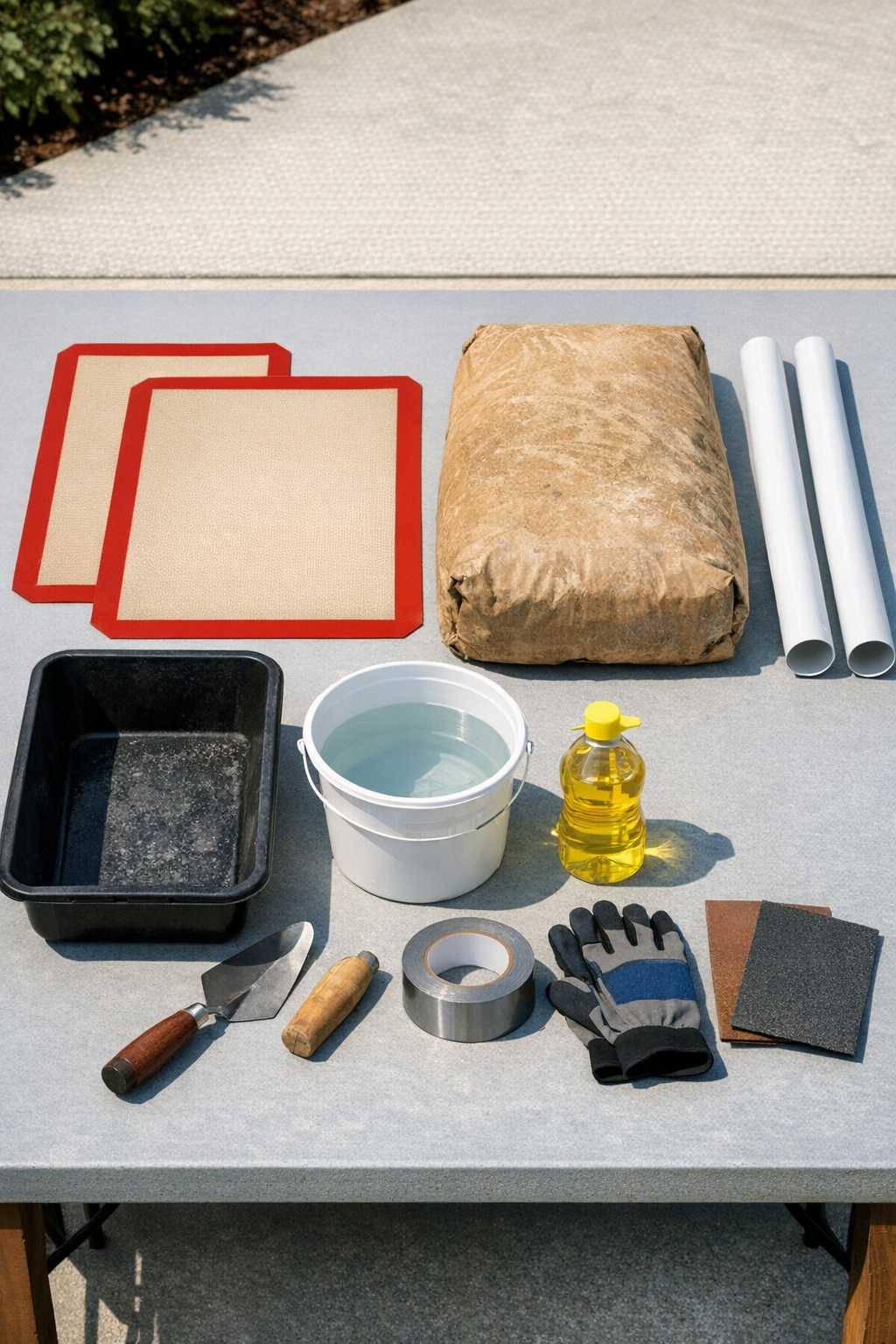
Materials
Instructions
1. Clean and dry the silicone baking mats, then lightly coat one side of each mat with cooking oil so the cement will release more easily after curing.
2. Roll each mat tightly into a log-shaped tube with the oiled side facing inward, aiming for an inside diameter of about 3 to 4 inches, and secure each roll with duct tape every few inches.
3. Stand the molds upright in a corner, against bricks, or inside a box so they cannot unroll or tip while you fill them.
4. Mix the concrete in a tub with water according to the bag directions until it reaches a thick oatmeal-like consistency that holds its shape but is still easy to scoop.
5. Scoop concrete into each silicone tube a few inches at a time, tapping the sides after every addition to settle the mix and remove air pockets.
6. Push one 16-inch PVC pipe into the center of each filled mold, leaving it fully embedded as the hidden core that adds structure and keeps the border log easier to handle than solid concrete alone.
7. Top off each mold with more concrete if needed, then smooth the ends with a trowel so both logs have flat, even ends.
8. Let the molds sit undisturbed for 24 to 48 hours, or until the concrete is firm enough to hold its shape without flexing.
9. Carefully cut the duct tape away, unroll the silicone mats, and lift them off the cured concrete logs.
10. Sand any sharp ridges or rough spots lightly, then allow the logs to cure for several more days before placing them in the yard.
11. Set the finished logs along a flower bed, walkway, or tree ring, pressing them slightly into the soil so they stay stable and form a clean heavy border.
Variations & Tips
For a more natural look: Press bark, crumpled foil, or a stiff brush lightly against the outside of the wet concrete at the ends before full curing to create a more wood-like texture.
If you want longer borders: Make several matching sections and place them end to end; shorter logs are much easier to mold, cure, and move than one extra-long piece.
About the secret item: The PVC pipe is the hidden helper here. It reinforces the shape, reduces weight a bit, and makes the finished piece less likely to crack through the center.
For cleaner release: Don’t skip the light oiling inside the silicone mats. Silicone already releases well, but that thin film makes unmolding even easier, especially with rougher concrete mixes.
Placement tip: Set these on level ground or bed them into an inch of sand if your soil is uneven. That small step helps the border look intentional instead of wobbly.
Weather note: If it’s hot or windy, cover the curing logs loosely with plastic so they dry more slowly; concrete generally cures stronger when it doesn’t lose moisture too fast.