
I love a garden project that feels a little unexpected, and these heavy ribbed landscape blocks absolutely fit that category. By using pleated furnace filters as the form, you get a crisp, architectural texture that looks far more expensive than it is, and the “secret ingredient” that makes the mix more workable and durable for this style of casting is acrylic fortifier.
If you enjoy concrete projects, modern garden accents, or sturdy handmade décor for patios and beds, this is a satisfying weekend build. I’m especially fond of projects like this because they borrow a trick from the kitchen: the container shapes the final presentation, and here the filter pleats do all the visual work for you.
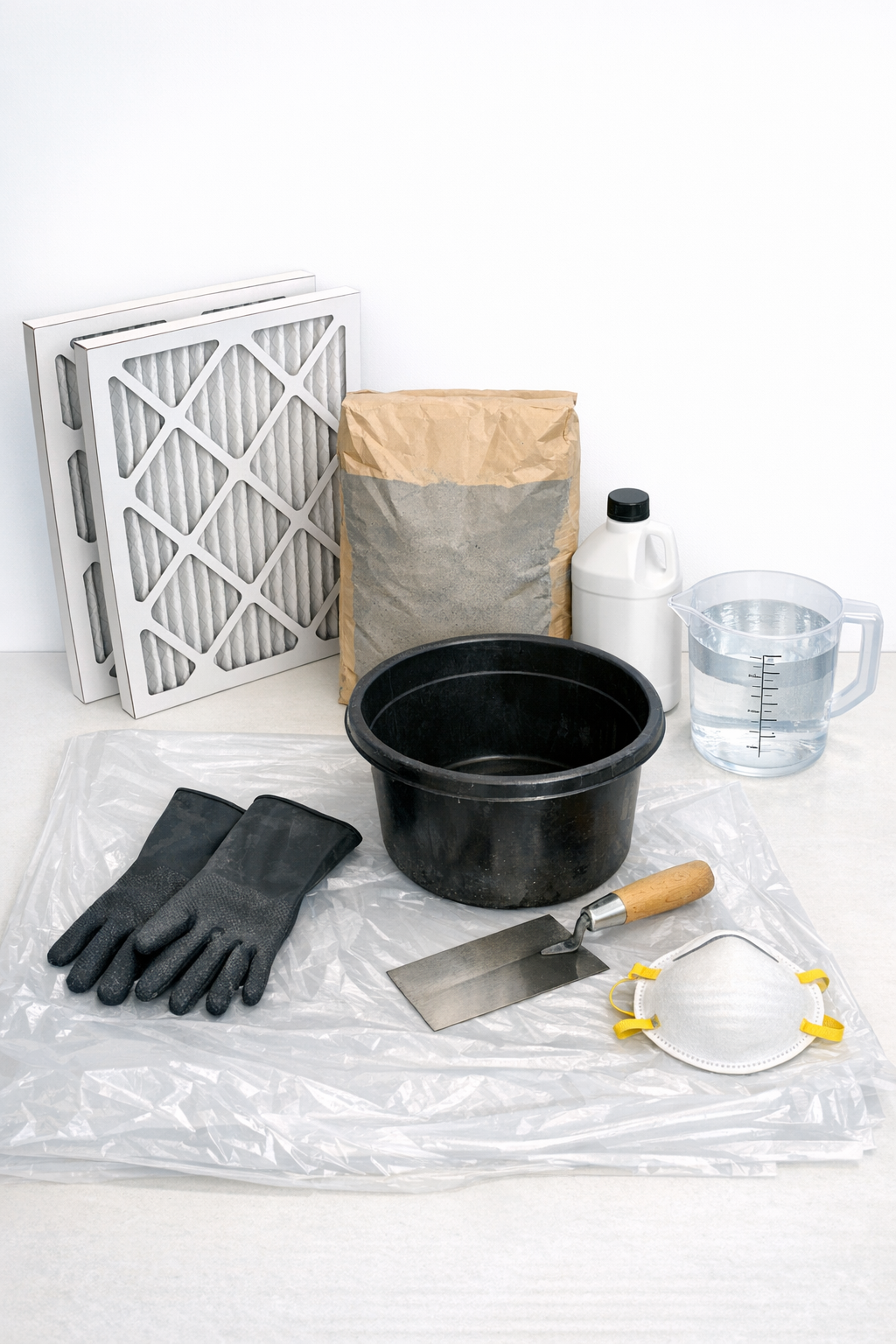
Materials
2 pleated furnace filters, 16 x 20 x 1 inch each
Instructions
1. Spread the plastic drop cloth over your work area and place the scrap board on top so you have a flat curing surface. Put on gloves and a dust mask before opening the concrete mix.
2. Set both furnace filters flat on the board and gently press them so they sit evenly without twisting. If the cardboard edge tabs are loose, tuck them in neatly so the filter keeps a clean rectangular shape.
3. In the bucket, combine about 20 pounds of the concrete mix with 1 cup of acrylic fortifier and 1 1/2 to 2 cups of water. Stir until you get a very thick, scoopable consistency, like stiff mashed potatoes that hold their shape.
4. Let the mixture rest for 2 minutes, then stir again to remove dry pockets. Add a small splash of water only if the mix is too crumbly to press into the pleats.
5. Trowel the thick cement into the top of the first filter, packing it firmly so the mix fills between every pleat. Build the layer up until the filter is fully filled and the top is roughly level.
6. Repeat with the second filter, using the remaining mix and making both blocks close to the same thickness. Smooth just the top surface lightly; don’t overwork the pleated side.
7. Tap the board gently a few times to help settle the mix and release trapped air. If any spots sink, add a little more cement and press it in firmly.
8. Leave the blocks undisturbed for 24 hours until they are hard enough to handle. If the weather is hot or windy, loosely cover them with plastic so they cure more evenly and avoid surface cracking.
9. Once firm, peel away the outer filter material carefully from each block. Brush off any loose paper or fibers, and let the blocks continue curing for another 24 to 48 hours.
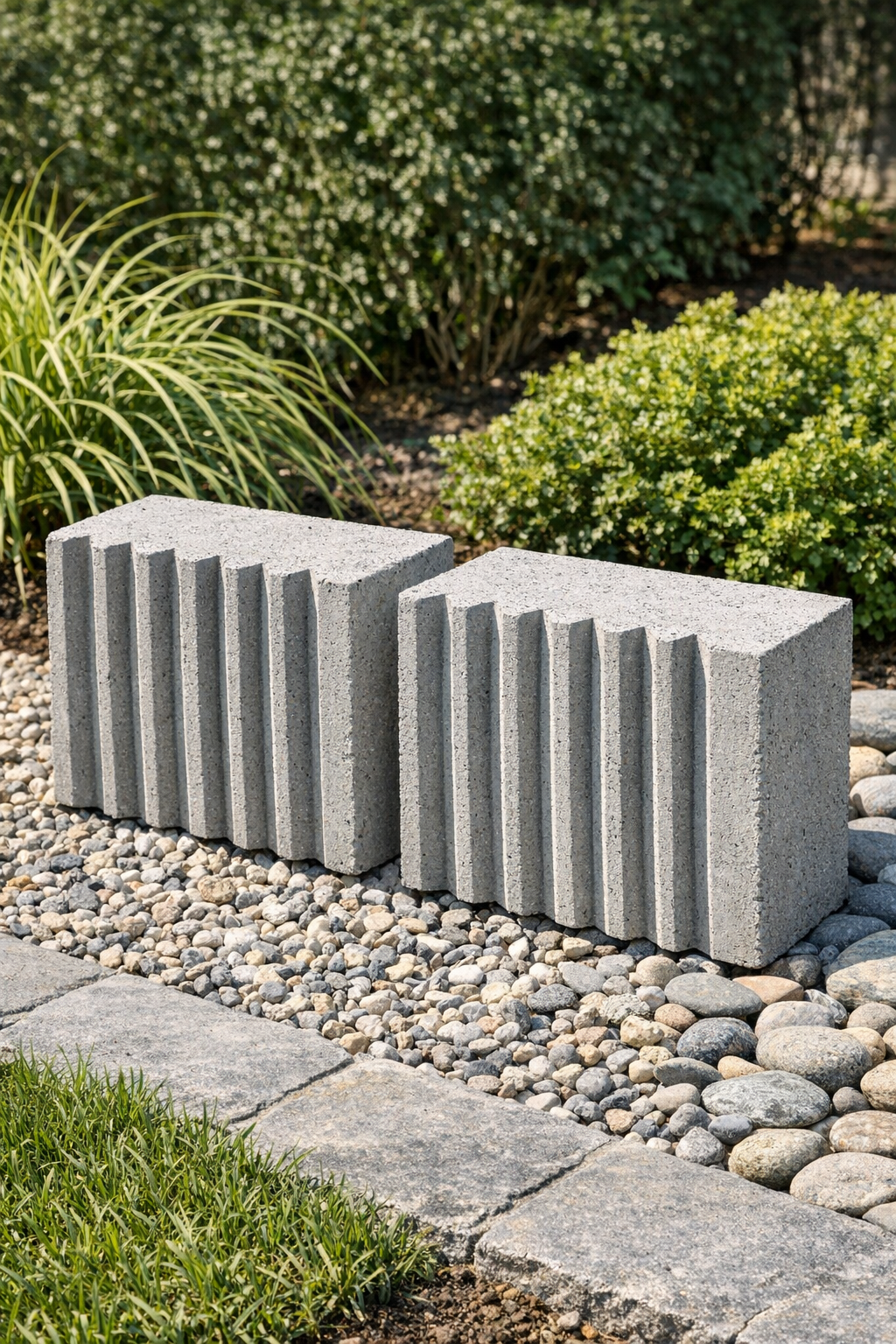
10. Place the finished blocks in the garden, along a path, or beside a container grouping with the ribbed texture facing outward. They are heavy enough to stay put and striking enough to work as sculptural accents on their own.
Variations & Tips
Change the scale: Larger furnace filters create more dramatic blocks, but they also get heavier fast, so I recommend staying with manageable sizes unless you have help moving them.
Add color: You can mix in a small amount of concrete pigment for charcoal, sand, or terracotta tones. Earthy shades work especially well in Midwestern gardens where our planting season gives us so much green to contrast against.
Use them different ways: These blocks can serve as path accents, low edging markers, pedestal risers for planters, or simple sculptural pieces tucked into mulch or gravel beds.
Mind the mix texture: The concrete should be thick, not pourable. If it’s too loose, it can slump through the filter and soften the ribbed detail, which is really the whole point of the project.
Let them cure fully: Concrete keeps gaining strength over time, so wait several days before placing the blocks where they’ll be bumped or moved often. Patience here pays off with cleaner edges and longer-lasting results.
Seal if desired: For a slightly richer color and easier cleanup, brush on a penetrating concrete sealer after full cure. I usually leave garden concrete natural, but sealer is useful in very wet spots.