
I love a project that turns castoffs into something genuinely useful, and these homemade heavy-duty drawer slides do exactly that. If you have a pair of splintered wooden drumsticks, a couple of sturdy garage scraps, and a pot big enough for boiling, you can make a simple sliding system that works beautifully for shop drawers, utility storage, or a rough-and-ready cabinet where strength matters more than fancy hardware.
In my house, I am always looking for ways to make storage work harder without spending extra money, especially in the garage and pantry overflow areas. This build is best for practical folks who do not mind a little measuring and sanding, and it is especially satisfying if you enjoy upcycling odd materials into something your family will actually use every day.
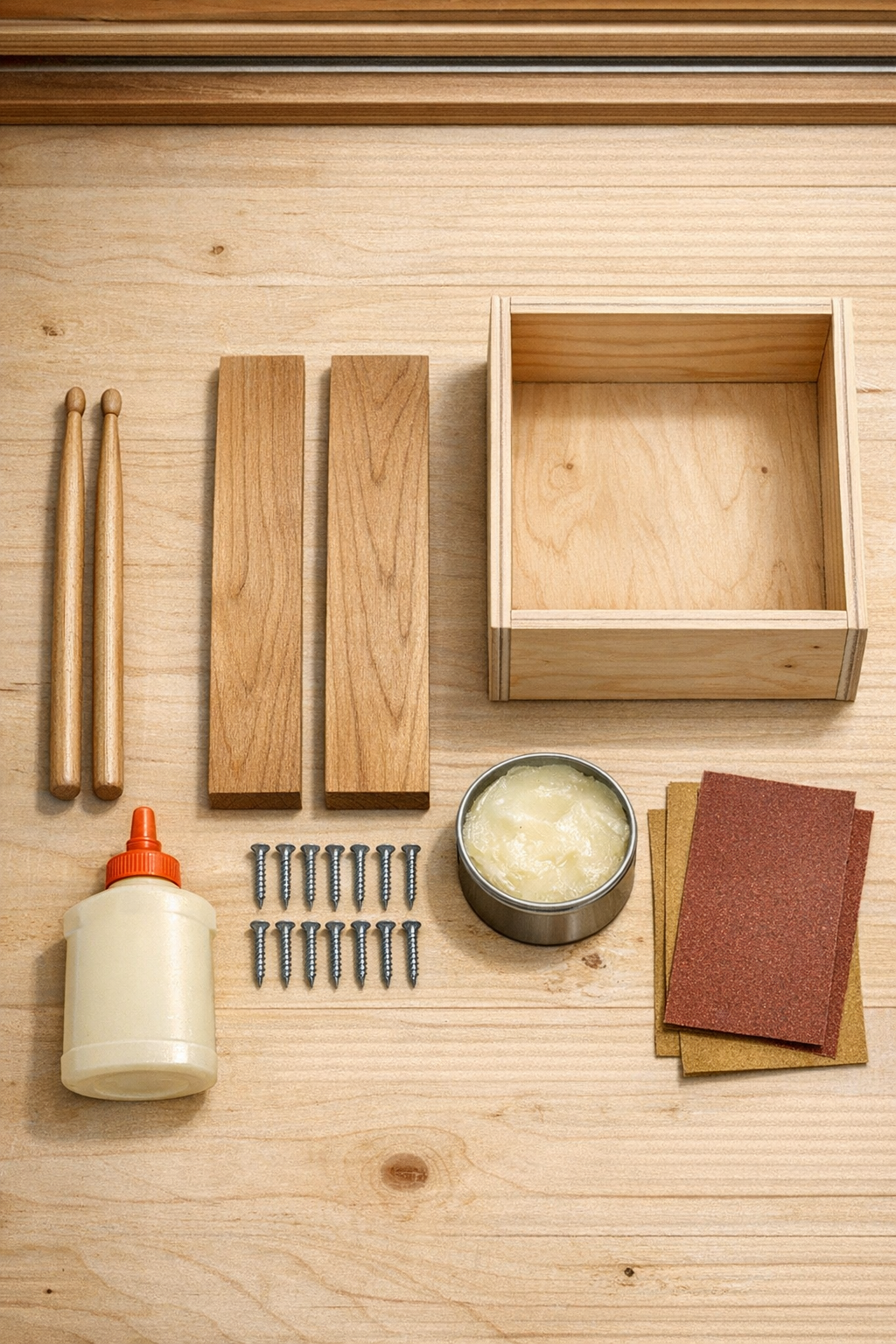
Materials
Instructions
1. Boil the splintered drumsticks in water for 20 to 30 minutes, then let them dry completely overnight so the wood fibers relax and the sticks can be sanded smooth without crumbling.
2. Sand the drumsticks with 120-grit, then 220-grit paper until they are smooth and evenly rounded, keeping as much thickness as possible for strength.
3. Cut the two 1 x 3 hardwood scraps to 18 inches long if needed, and sand their faces and edges so they sit straight and clean inside the cabinet opening.
4. Center one drumstick lengthwise on each 1 x 3 board and glue it down, then drive 3 screws through the underside of each board into the drumstick to lock it in place without crushing the wood.
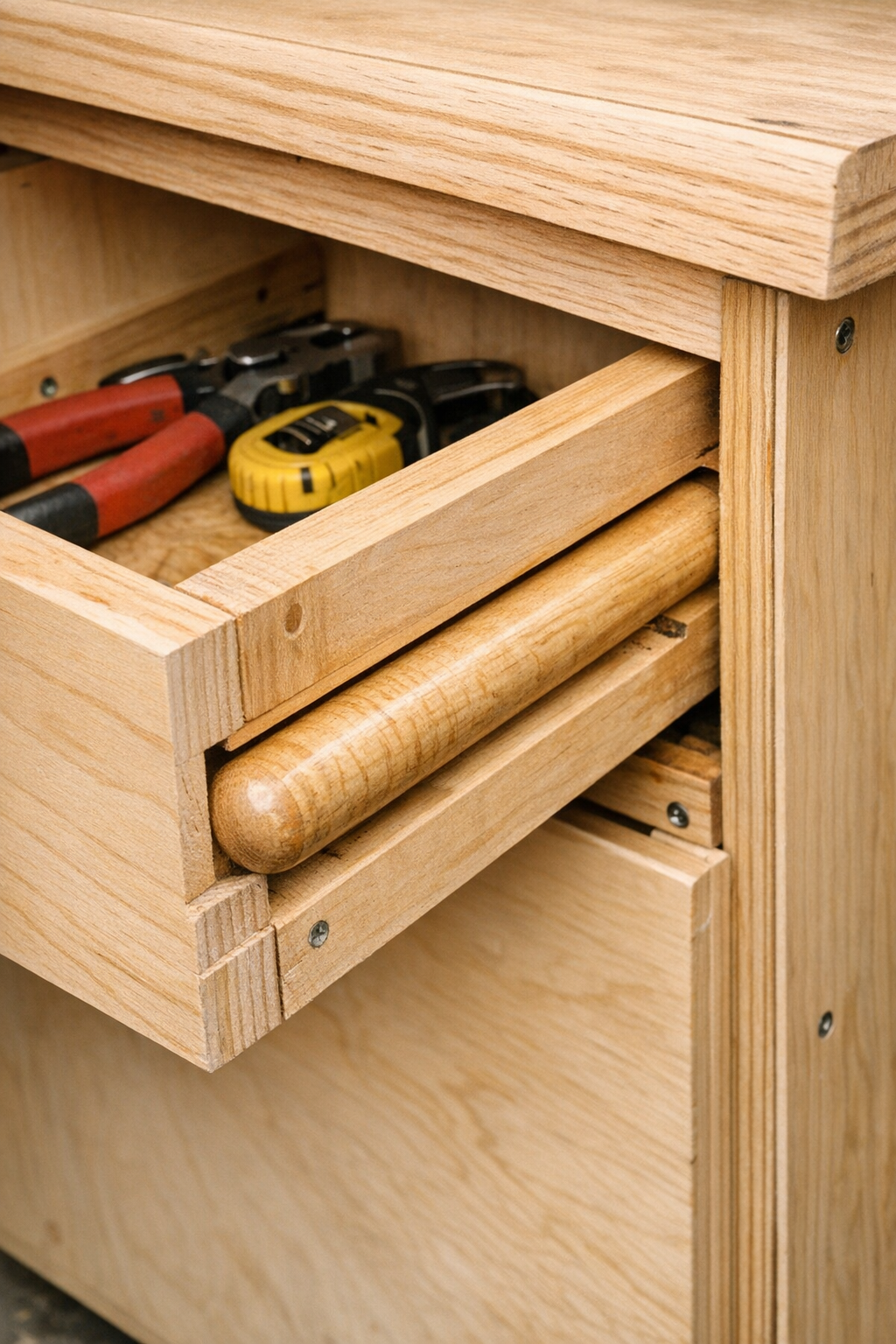
5. Fasten these runner assemblies to the inside cabinet walls, one on each side, making sure the drumsticks are level with each other and set back 1 inch from the cabinet face.
6. Attach one 3/4 x 3/4 inch hardwood strip to each lower outside side of the drawer box, positioning each strip so it will ride directly over the mounted drumstick runner.
7. Rub paste wax over the drumsticks and the inside edges of the drawer rails, then buff lightly so the wood slides smoothly without leaving a sticky buildup.
8. Set the drawer into the opening and lower the side rails onto the rounded drumsticks, then slide it in and out several times to find any tight spots.
9. Sand or shim as needed until the drawer moves freely and stays level under weight; for a heavy-duty shop drawer, test with 25 to 40 pounds before calling it done.
10. Once the movement feels smooth, tighten all screws and add a simple stop block at the back of the cabinet if you want to keep the drawer from sliding too far.
Variations & Tips
For extra weight: Use oak or maple scraps instead of softwood for the side runners and drawer rails. That one change makes a big difference if the drawer will hold tools, canned goods, or hardware.
For picky spaces: If your cabinet is a little uneven, install the runner boards on thin shims first. I do this a lot in older spaces, and it saves frustration later when the drawer wants to drift or bind.
Smoother glide: A second light coat of paste wax after the test fitting often gives the drawer a much nicer motion. Just keep it thin so dust does not stick.
Safer salvaged wood: Skip any drumsticks that are cracked all the way through or feel soft after boiling. You want rounded hardwood that is worn but still solid.
Kid-friendly use: If you are making this for family storage instead of the garage, round over every exposed corner and add a front stop so the drawer cannot be pulled out too quickly.
Easy substitution: If you only have one usable drumstick, you can rip a hardwood dowel to the same length for the other side. Matching thickness matters more than matching material.