
I’m always weirdly pleased when a piece of packaging turns out to be more useful than the thing it came in, and onion bags are one of my favorite examples. If you’ve got a torn window screen and don’t want to replace the whole panel, this little fix turns a plastic mesh onion bag plus two basic hardware-bin scraps into a surprisingly tough patch that holds up far better than the flimsy quick fixes I used to try.
This project is great for renters, busy homeowners, or honestly anyone who notices a small screen tear right before bug season gets out of hand. I like it because it’s fast, inexpensive, and uses materials I usually already have around the house, which is exactly the kind of practical project that fits into a packed weeknight.
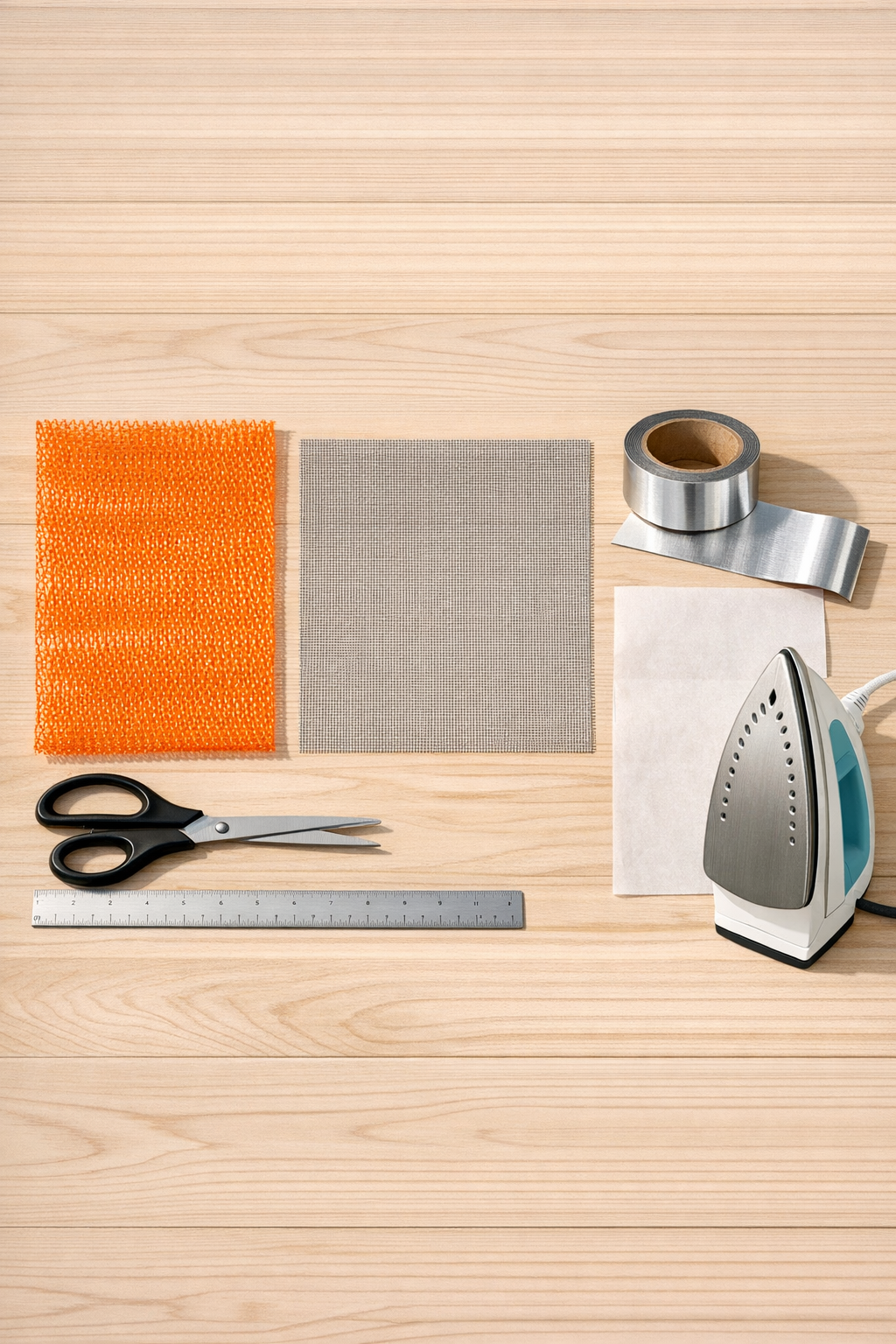
Materials
Instructions
1. Wash the onion bag with dish soap and warm water, then let it dry completely. Any dirt or onion residue left in the mesh can melt into the plastic and make the patch smell or look cloudy.
2. Cut away seams, labels, and thick edges so you’re left with a flat piece of plastic mesh. Trim it into a rectangle slightly larger than the screen tear, usually at least 1 inch bigger on all sides.
3. Place the onion mesh between two sheets of parchment paper and set it on a heat-safe surface. Press with a warm iron for 3 to 5 seconds at a time until the mesh softens and flattens into a denser patch material without fully melting into a solid sheet.
4. Let the flattened mesh cool for 30 seconds, then peel back the parchment and check its stiffness. If it still feels too loose or stretchy, press it again briefly until it feels firm but still has visible openings for airflow.
5. Cut a matching backing piece from the aluminum window screen scrap so it is the same size as the fused onion-mesh patch. This metal layer gives the repair structure and helps the patch sit neatly over larger tears.
6. Clean the damaged area of the window screen with soapy water and a cloth, then dry it well. A clean surface helps the patch lie flat and gives the repair tape a much better grip.
7. Trim any frayed strands around the tear so the opening has tidy edges. If a strand is sticking up, snip it flush instead of pulling it, which can make the hole spread.
8. Place the aluminum screen scrap behind the tear on the outside-facing side of the screen, then center the fused onion-mesh patch over the tear on the room side. Sandwiching the damaged area between the two meshes makes the repair much tougher than a single patch alone.
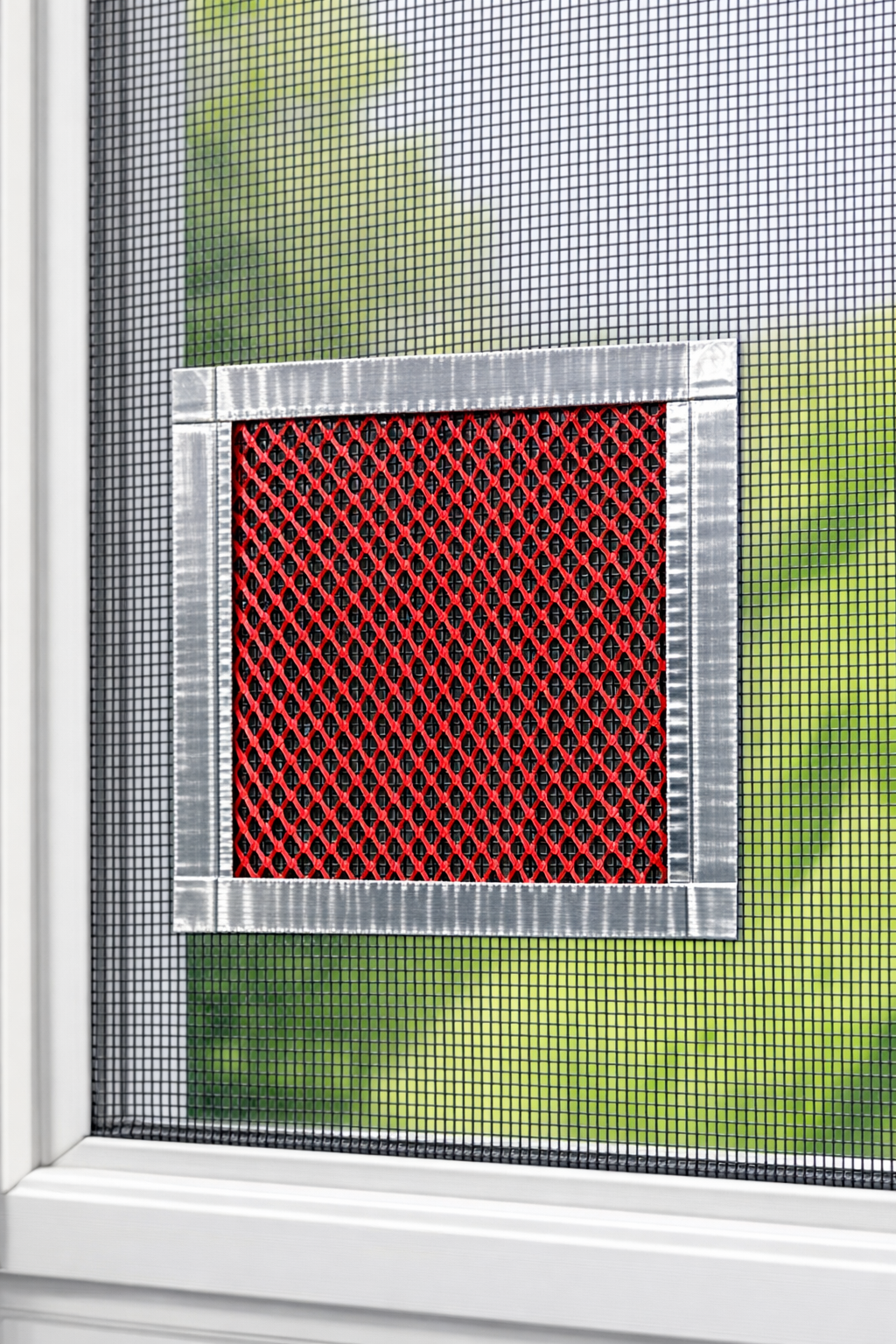
9. Cut strips of self-adhesive aluminum repair tape about 1/2 inch wide and apply them around all four edges of the patch. Press firmly so the tape overlaps both the original screen and the patch layers without blocking the center airflow.
10. Press along the taped edges with the back of a spoon or your fingers to seat everything into the screen mesh. Check from both sides and trim any excess tape or patch material for a neat, low-profile finish.
11. Leave the repaired screen flat for 15 to 30 minutes before reinstalling or closing the window against it. Once set, the patch should feel firm, flexible, and much more durable than a basic peel-and-stick mesh square.
Variations & Tips
For tiny holes: If the damage is smaller than a dime, you can skip the aluminum screen backing and use just a small fused onion-mesh patch with thin tape around the perimeter.
For darker screens: Use a red, purple, or yellow onion bag only if that’s what you have, but I’ve found orange mesh is most noticeable. If appearance matters, top the fused plastic with a small piece of gray or charcoal screen scrap.
Iron temperature: Start lower than you think you need. The first time I tried this, I got impatient and overheated the mesh, and it shrank into a lumpy blob pretty fast.
Best patch size: Keep the patch at least 1 inch larger than the tear on every side. That extra overlap is what helps it stay put when the screen flexes during installation or cleaning.
No repair tape on hand: Small dabs of clear exterior adhesive at the corners can work in a pinch, but the narrow aluminum tape gives the cleanest edge and the most even hold.
Save prep time: I like to flatten two or three onion-bag pieces at once and keep them in a drawer with my spare screen scraps. It turns a “deal with it later” repair into a 10-minute fix when I finally notice a tear before dinner.