
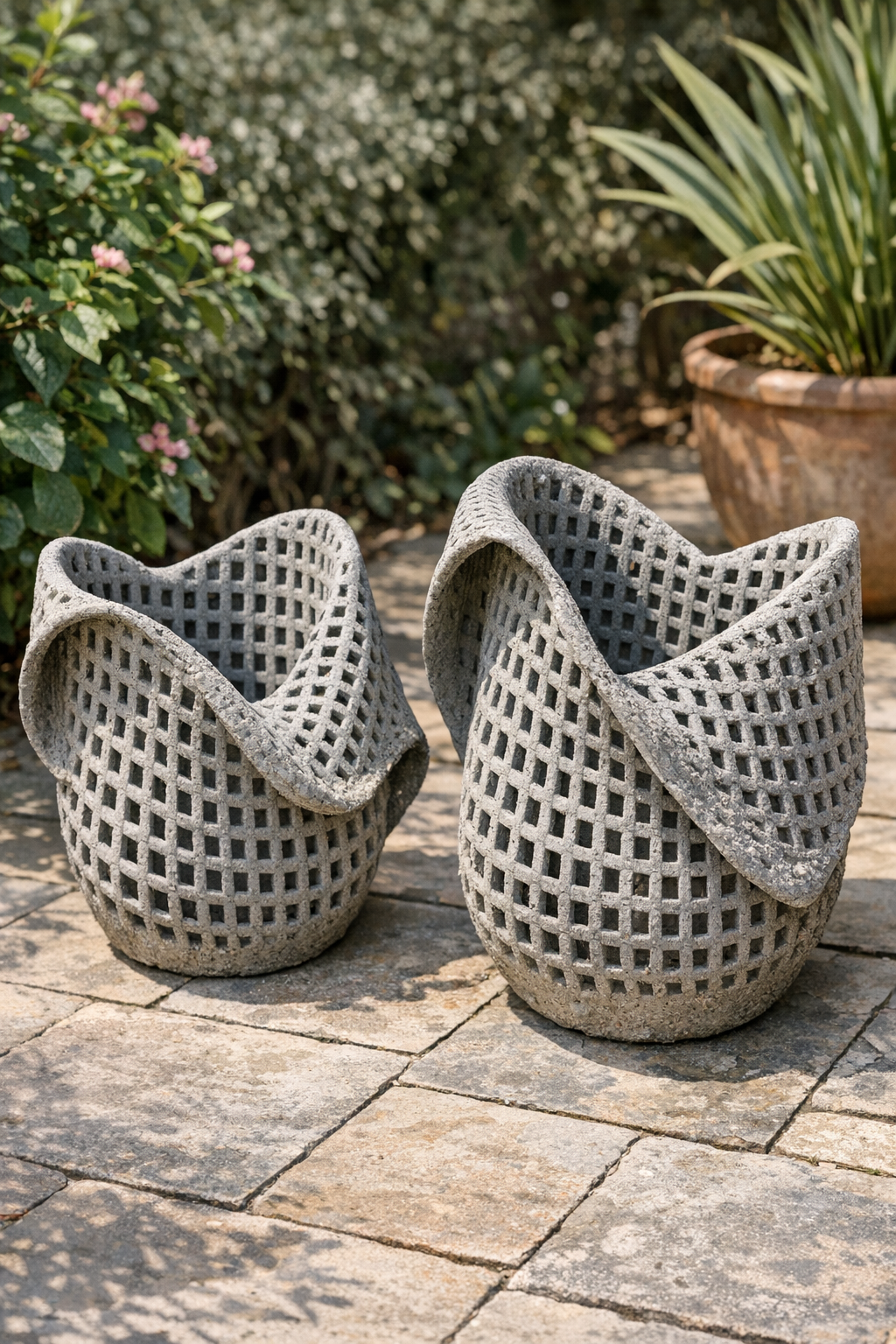
This project turns an ordinary plastic laundry basket into a set of sculptural grated yard vessels that look surprisingly high-end once they cure. The basket creates that pretty open pattern, the cement gives the piece weight and durability, and the extra household item helps shape and support the form while it sets.
I love projects like this because they make a big visual impact without asking for fancy supplies or a whole free weekend. If you want oversized planters or decorative outdoor vessels on a budget, this is the kind of DIY that feels a little messy in the best way and ends with something people honestly assume you bought.
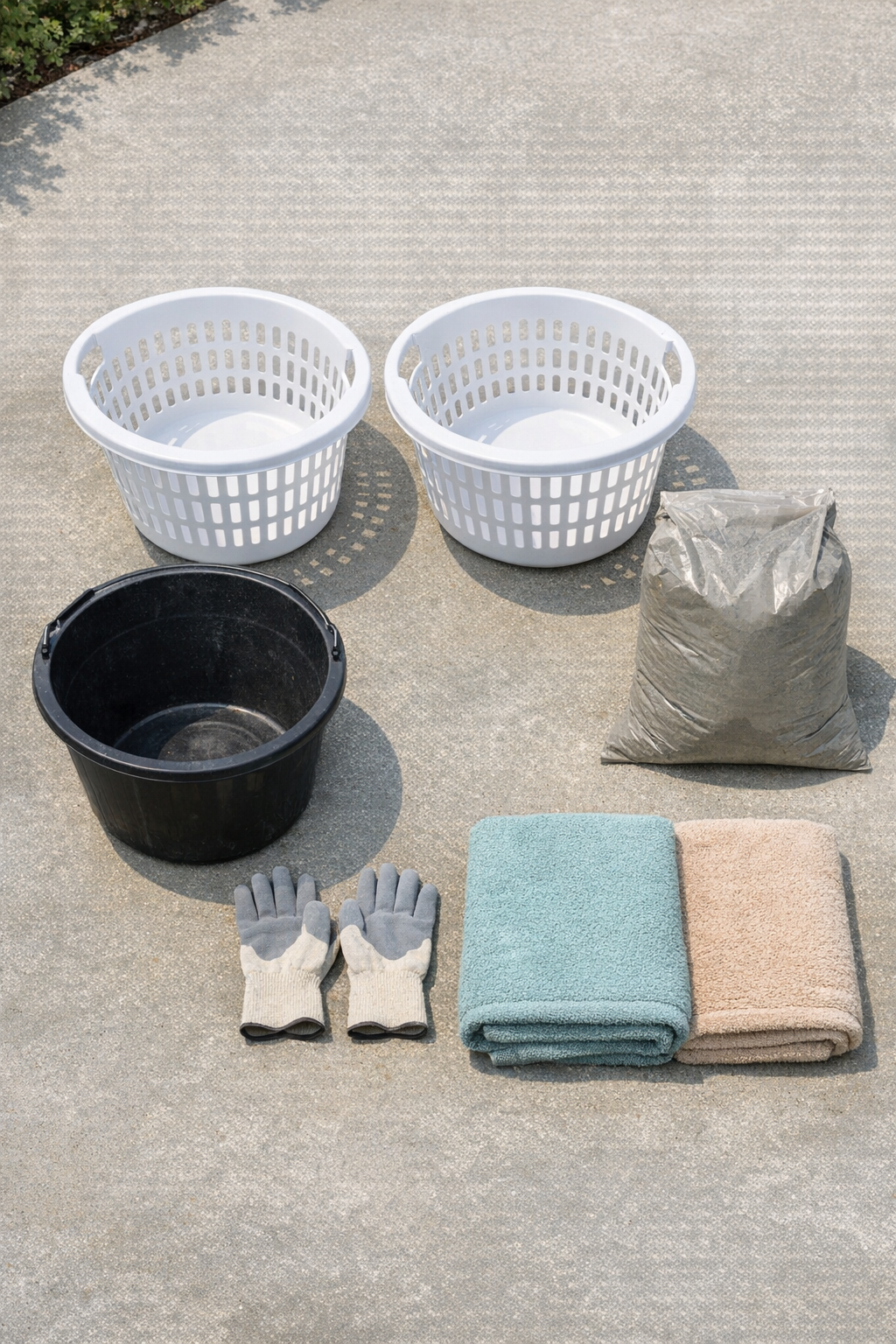
Materials
2 plastic laundry baskets, medium size, about 18 to 22 inches tall
Instructions
1. Set up your workspace outdoors or in a garage with a drop cloth or scrap cardboard under everything, because cement splatter gets messy fast. Put the laundry baskets upside down if you want vessel shapes with a narrower base and wider opening.
2. Dampen the towels with clean water and wring them out so they are wet but not dripping. This helps them absorb the cement mixture evenly instead of creating dry patches.
3. Mix the cement in a large bucket or tub with water until it reaches a thick pancake-batter consistency. Stir until there are no dry pockets, because lumps will show up in the finished texture.
4. Dip one towel into the wet cement and press it down until every section is fully coated. Lift it out and let the excess drip back into the bucket for a few seconds.
5. Drape the cement-coated towel over the upside-down laundry basket, centering it so the fabric falls evenly on all sides. Gently press the towel into the basket’s open grid so the grated pattern starts to transfer.
6. Shape the folds with your hands, smoothing bulky spots and creating an even rim around the bottom edge. If you want a more defined vessel shape, tuck or pull the towel until the silhouette looks balanced from every angle.
7. Repeat the process with the second towel and basket if you are making a matching set. Work fairly quickly so the cement stays workable while you shape both pieces.
8. Let the forms sit undisturbed for 24 hours until the cement hardens enough to hold its shape. If the weather is very hot or windy, loosely cover them with plastic so they do not dry too fast and crack.
9. Once cured, lift the hardened vessel off the basket and peel away any sections that are still lightly attached. Stand the piece upright and check the base; if needed, sand or rub down rough high spots after it fully hardens.
10. Cure the vessel for another 24 to 48 hours before using it outdoors. Once fully set, place it as a decorative yard accent or use it as an outer planter around a nursery pot instead of planting directly into the cement.
Variations & Tips
Use different basket shapes: Round and oval laundry baskets give noticeably different silhouettes, so if you want a more modern look, try a taller narrow basket instead of a wide one.
Make drainage simple: If you plan to set a plant inside, I like using the cement piece as a cachepot and dropping in a plastic nursery pot. It is much easier than drilling drainage later.
Watch cement thickness: If the mix is too thin, it will slide right off the towel; if it is too thick, it will not soak in well. Aim for a texture that coats the fabric fully but still drapes.
Embrace imperfect folds: The little ridges and uneven edges are what make these look custom and organic. I try not to overwork the shape once the towel is on the basket.
Customize the finish: After full curing, you can leave the vessels natural for a stone-like look or dry-brush them with outdoor paint for a softer garden finish.
Plan for weight: These get heavy fast, especially in larger sizes, so I always decide where they will live before filling the area with plants or décor.